• How Mistakes Change Clinical Practices

    How Mistakes Change Clinical Practices

    When fallible healthcare providers practice an imperfect science like medicine, mistakes are inevitable no matter how many protocols, checklists, or measures are in place. Some estimates suggest ~ 100,000 patients die yearly from medical errors. There are processes which aim to identify how errors occur and potential changes that could…
    Read More

  • What To Expect The Day Of Heart Surgery

    What To Expect The Day Of Heart Surgery

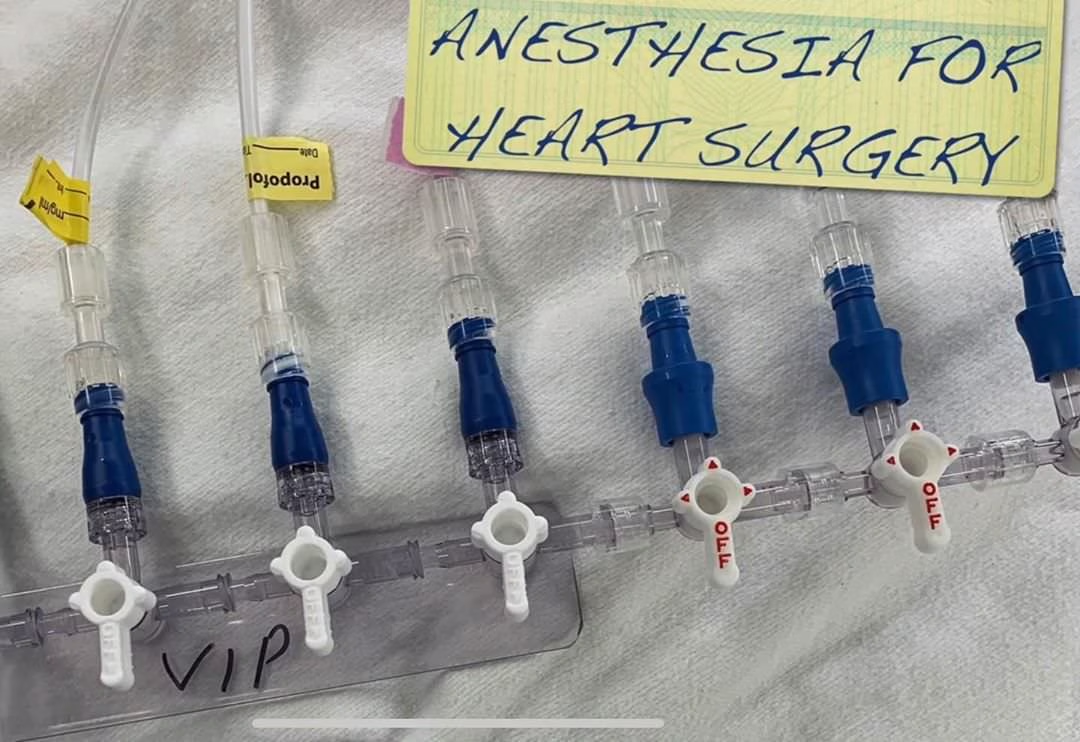
    As a cardiothoracic anesthesiologist, I often meet patients who have wrapped their head around the fact that they are getting surgery, but they have a lot of fear about the anesthesia, cardiopulmonary bypass, and what to expect post-operatively in the ICU. So much of fear/anxiety is driven by the fact…

    Read More

  • Transporting Critically Ill Patients To The Operating Room

    Transporting Critically Ill Patients To The Operating Room

    For critically ill inpatients on multiple pressors, mechanical ventilation, and/or mechanical circulatory support devices, it’s customary for the anesthesiologist to be a part of the transport team. Over the years, I’ve seen countless styles of preparation for this important task that MANY operative staff take for granted. So much can…

    Read More

  • Safely Drawing Up And Labeling Medications

    Safely Drawing Up And Labeling Medications

    Every day as an anesthesiologist, I reconstitute, draw up, and administer antibiotics, hypnotics, narcotics, paralytics, inotropes/pressors, blood products, fluids, vasodilators, and a myriad of other medications. Each year, the FDA receives over 100,000 reports associated with a suspected medication error causing hospitalization, life-threatening emergency, morbidity, and even death!

    Read More

  • The Unknown Unknowns

    The Unknown Unknowns

    Medicine is all about constantly asking questions. Why is it so? Can it be done better? What am I missing? What’s the diagnosis? What labs/tests should I order? What kind of treatment(s) can I offer?

    Read More

  • The Patient Belongs To Everyone In The Operating Room

    The Patient Belongs To Everyone In The Operating Room

    Surgical disciplines meet with patients, decide what operation(s) to perform, discuss the risks/benefits, and manage post-operative admissions with follow-ups. Undoubtedly, it’s a time and labor intensive job, and as a perioperative physician myself, I have an undying respect for my surgical colleagues.

    Read More

  • Barriers To Care

    Barriers To Care

    One of my favorite things about anesthesiology and critical care is the freedom I have to provide quality patient care. PACU and ICU nurses are top notch, pharmacists are always available with every medication I could possibly need, and as a provider, I’m given so much autonomy with very little…

    Read More

  • Swallow Your Pride – Remember The Patient

    Swallow Your Pride – Remember The Patient

    Training institutions face an interesting dilemma in allowing relatively inexperienced trainees to practice their skills while trying to provide safe and effective patient care. Attending physicians have mentioned feedback from trainees along the lines of “Dr. X took the procedure away from me!” This conveniently leaves out any unsuccessful attempts made…

    Read More

  • A Patient’s Right To DNR/DNI

    A Patient’s Right To DNR/DNI

    Whether it’s an outpatient clinic visit or a prolonged hospital stay in the intensive care unit (ICU), patients who have been deemed to have decision-making capacity have the right to refuse treatment. A physician often assesses four criteria in determining capacity:

    Read More

  • Patients and Protocols

    Patients and Protocols

    Protocols and checklists are routinely used in healthcare to avoid oversights and preventable mistakes. In the perioperative setting, there are multiple hard stops to prevent dangerous mistakes (ie, doing the wrong operation on the wrong patient). The more I grow as a resident physician anesthesiologist, the more I appreciate the importance…

    Read More