• I Hate Tramadol

    I Hate Tramadol

    Tramadol (Ultram) is often prescribed for analgesia because it’s easy to write for (especially at hospital discharge); however, its pharmacology makes it unreliable for pain control. The parent compound has only weak affinity for the mu opioid receptor, so most of the meaningful opioid effect comes from its active metabolite…

    Read More

  • IV Versus PO Acetaminophen (Tylenol)

    IV Versus PO Acetaminophen (Tylenol)

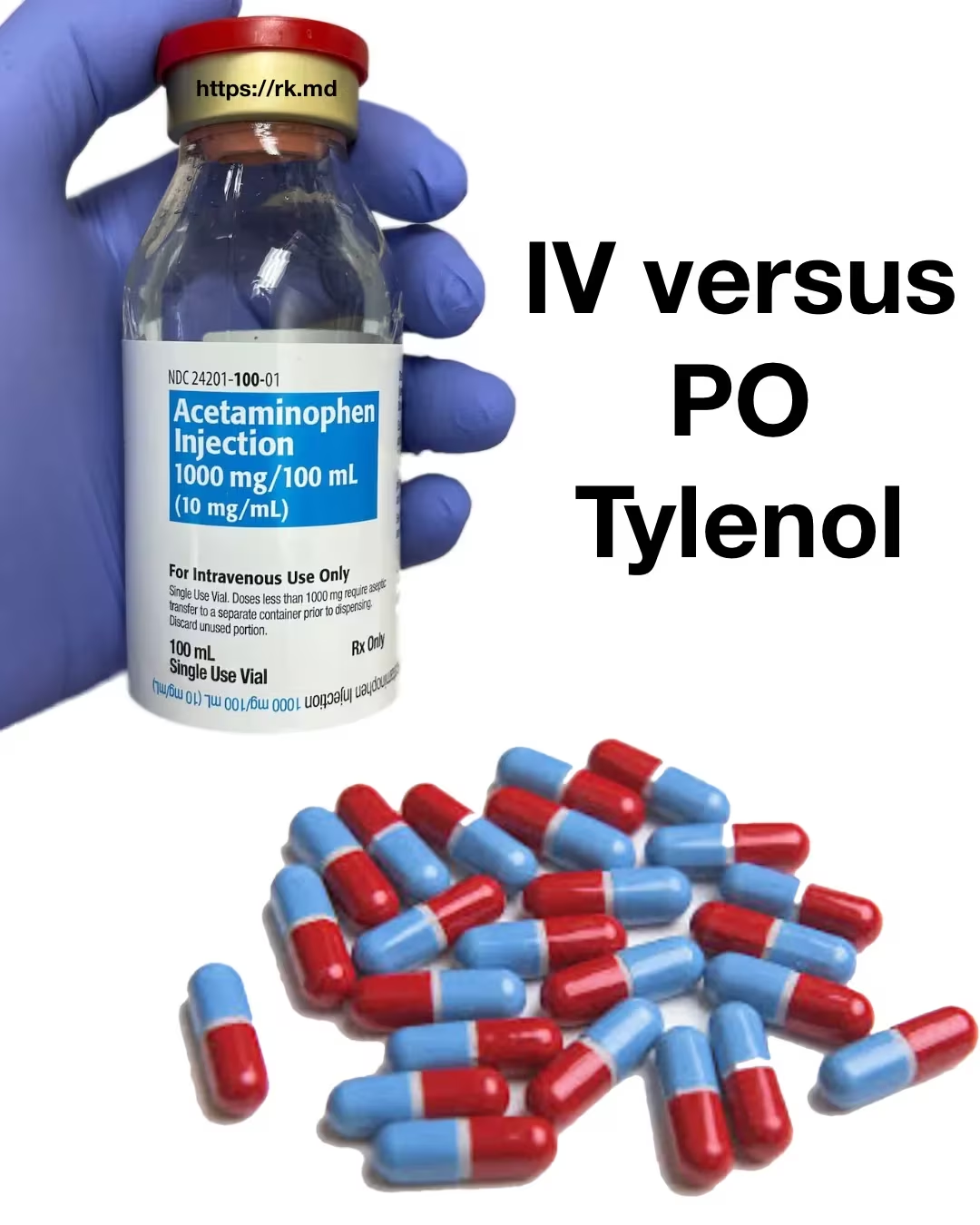
    Acetaminophen (Tylenol) is routinely administered in IV and PO (pill) forms in perioperative and critical care medicine, but the debate of which route of administration is superior comes up all the time, despite the evidence being consistent for years. TLDR – once both formulations are absorbed, the analgesic effect is…

    Read More

  • Isopropyl Alcohol (IPA) Aromatherapy for Nausea Relief

    Isopropyl Alcohol (IPA) Aromatherapy for Nausea Relief

    Isopropyl alcohol (IPA) aromatherapy by means of inhaling the vapors from an IPA pad has been a simple bedside practice used to relieve nausea. Several studies suggest that IPA inhalation can provide a quick, modest reduction in nausea severity in an inexpensive, safe, and easy-to-administer intervention. However, other trials and…

    Read More

  • Hydroxocobalamin vs. Methylene Blue for Vasoplegia After Cardiac Surgery

    Hydroxocobalamin vs. Methylene Blue for Vasoplegia After Cardiac Surgery

    As a cardiac anesthesiologist and intensivist, vasoplegia following cardiopulmonary bypass is an issue I often face in the OR and ICU. This distributive shock phenotype is characterized by low systemic vascular resistance, despite preserved or elevated cardiac output, primarily driven by dysregulated nitric oxide (NO) and guanylate cyclase signaling, which…

    Read More

  • Eutectic Mixture Of Local Anesthetics (EMLA)

    Eutectic Mixture Of Local Anesthetics (EMLA)

    A eutectic mixture refers to a combination of two or more substances that, when mixed in a specific ratio, form a mixture with a lower melting point than any of the individual components alone. As a cardiac anesthesiologist and intensivist, I occasionally use a eutectic mixture of local anesthetics (EMLA)…

    Read More

  • Fever With Dexmedetomidine

    Fever With Dexmedetomidine

    Dexmedetomidine (Precedex) is a selective alpha-2 agonist I frequently use as a cardiac anesthesiologist and intensivist to provide analgosedation before extubation. Beyond its sedative and sympatholytic effects, dexmedetomidine has been increasingly implicated in drug-induced fever. Although listed in the FDA label, recent literature provides a clearer picture. A post hoc…

    Read More

  • Fondaparinux

    Fondaparinux

    Fondaparinux is a synthetic pentasaccharide that exerts its anticoagulant effect by binding to antithrombin III, inducing a conformational change that selectively inhibits activated factor X (Xa). Unlike unfractionated heparin or low molecular weight heparins, fondaparinux does not inhibit thrombin (factor IIa) and is too small to promote platelet activation, making the risk…

    Read More

  • Hypertonic Salt Bomb

    Hypertonic Salt Bomb

    A 23.4% hypertonic saline (HTS) infusion (referred to as a “salt bomb”) is primarily indicated for cases of refractory intracranial hypertension as seen in traumatic brain injury, large strokes, and malignant cerebral edema. HTS generates an osmotic shift to draw water out of swollen brain tissue to reduce intracranial pressure…

    Read More

  • Isosorbide Mononitrate Versus Dinitrate

    Isosorbide Mononitrate Versus Dinitrate

    Isosorbide mononitrate (Imdur, ISMN) and isosorbide dinitrate (Isordil, ISDN) are two nitrates used to induce venodilation and alleviate angina pectoris, but they differ in their pharmacokinetics and clinical applications. Both ISMN and ISDN are prodrugs that undergo biotransformation to release nitric oxide (NO). This occurs more directly in ISMN, whereas…

    Read More

  • Aprepitant

    Aprepitant

    Aprepitant (Emend) is a potent, oral antiemetic used to prevent chemotherapy-induced nausea and vomiting (CINV) and postoperative nausea and vomiting (PONV). Fosaprepitant is a prodrug of aprepitant, with the benefit that it can be administered intravenously for patients who are too nauseous to reliably take oral aprepitant. Aprepitant specifically targets and inhibits NK1 receptors,…

    Read More