
Fibryga (human fibrinogen) is a concentrate designed to restore factor I (fibrinogen), the final substrate of clot formation. Fibrinogen is converted by thrombin into fibrin, which polymerizes and stabilizes the platelet plug. When fibrinogen levels fall, the resulting clot is weak, easily disrupted, and unable to achieve durable hemostasis.
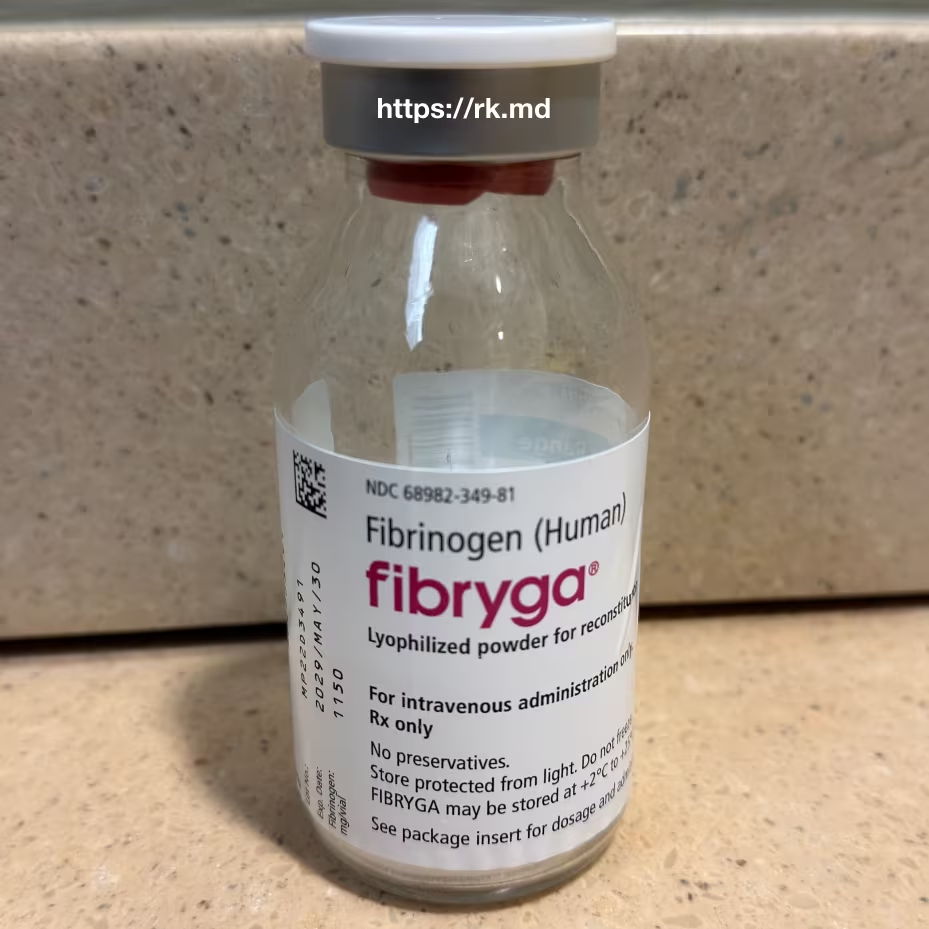
In critical illness and major bleeding (trauma, cardiac surgery, postpartum hemorrhage, etc.), fibrinogen is often the first coagulation factor to reach critically low levels due to hemodilution, consumption, and hyperfibrinolysis. Low fibrinogen manifests as diffuse microvascular bleeding rather than a single surgical source. Viscoelastic testing often shows reduced clot amplitude, reflecting impaired fibrin-based clot strength. Fibryga enables rapid fibrinogen repletion without the volume burden of fresh frozen plasma or cryoprecipitate.
The primary indications are treatment of acquired hypofibrinogenemia in the setting of active bleeding and congenital fibrinogen deficiency. In perioperative and ICU practice, it is often used as part of a goal-directed transfusion strategy guided by TEG or ROTEM. The advantage is speed, predictability, and avoidance of large-volume transfusion. As with any prohemostatic therapy, the balance between bleeding control and thrombosis must be considered, but when used appropriately, fibrinogen replacement addresses a fundamental and often underrecognized driver of coagulopathy. Oh, and don’t forget normothermia and calcium repletion!


Leave a Reply