
Glucagon (GlucaGen) is a secretin-type peptide hormone made in the pancreas responsible for catabolism primarily to produce glucose via glycogenolysis and gluconeogenesis; in this sense, it’s an “anti-insulin” used in the treatment of profound hypoglycemia.
In the OR, I most commonly administer 1 mg IV glucagon to relax gastrointestinal smooth muscle in cases like esophagectomies where esophago-gastric manipulation is critical. Interestingly, glucagon has also been shown to relax smooth muscle in the airway via a nitric oxide/prostaglandin-mediated mechanism.
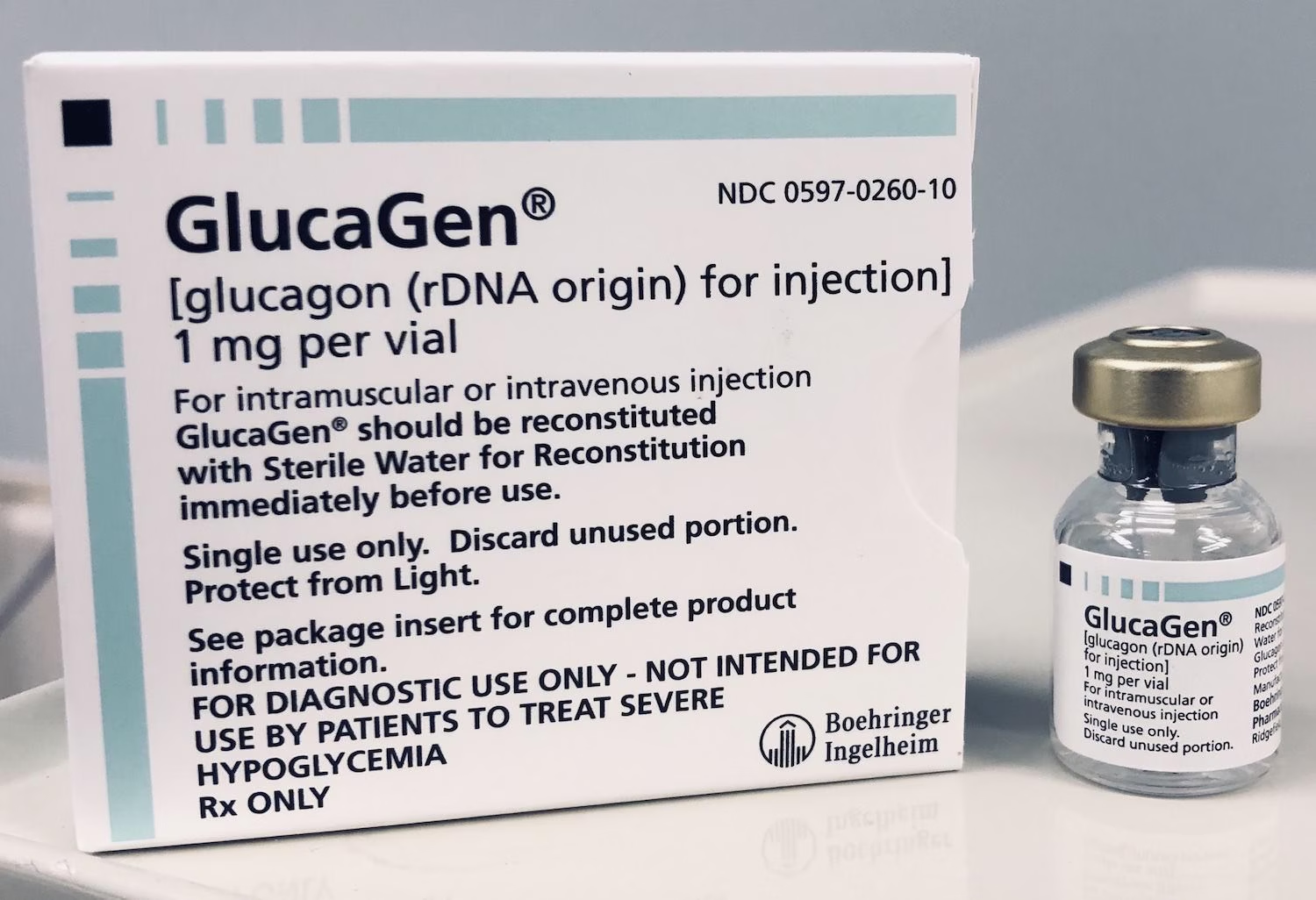
In the ICU, I use a higher dose of glucagon (5-10 mg + drip titrated to effect) to reverse life-threatening hypoglycemia (with an amp or two of D50W) and to treat beta-blocker toxicity. But how is an anti-insulin hormone useful in treating this toxicity?
I worry about two things in beta-blocker toxicity: hypoglycemia (which is obviously helped with glucagon) and the heart – namely decreased chronotropy (heart rate), inotropy (contractility), bradyarrhythmias, and hypotension from a combination of the aforementioned. Beta-blockers (especially selective beta-1 blockers) inhibit the Gs second messenger system normally involved with activating adenylyl cyclase to catalyze the formation of cyclic AMP (cAMP). Glucagon activates adenylyl cyclase through a DIFFERENT mechanism thereby restoring cAMP synthesis despite the presence of beta-blockers.
Drop me a comment below with questions! :-)




Leave a Reply