
Middle aortic (“mid-aortic”) syndrome (MAS) refers to a segmental narrowing of the distal thoracic or abdominal aorta, often with associated stenosis of the renal and visceral branches. The result is severe renovascular hypertension in children and young adults who otherwise have “healthy” hearts and no atherosclerotic risk profile. Etiologies range from isolated congenital aortic hypoplasia to inflammatory arteriopathies, such as Takayasu disease, as well as syndromic associations, including neurofibromatosis type 1, Williams syndrome, and other monogenic vasculopathies increasingly identified with modern genomic sequencing techniques.
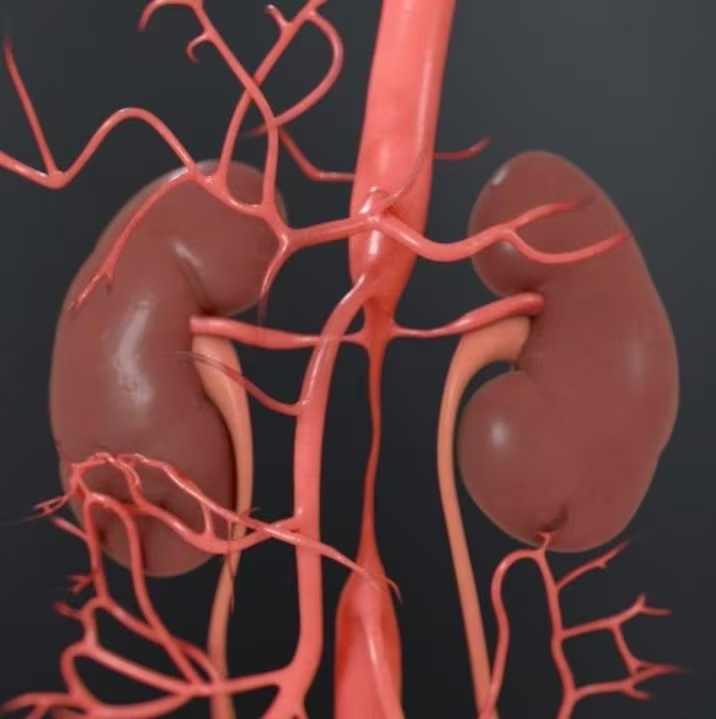
Clinically, these patients show up with hypertension that feels disproportionate to everything else in the chart. Children and adolescents may present with headaches, seizures, hypertensive encephalopathy, heart failure, or claudication and abdominal pain from visceral ischemia. Adults who “escaped” earlier diagnosis often carry a label of resistant hypertension on multiple agents until someone finally images the entire aorta and renal vasculature. Cross-sectional angiography with CT or MRI shows a narrowed aortic segment with poststenotic dilatation and variable involvement of the renal and mesenteric arteries.
Older data describe nearly half of untreated symptomatic patients developing hypertensive encephalopathy, heart failure, or stroke by the third or fourth decade of life, with survival beyond age forty reported in less than one-fifth of cases. Children present with diffuse arterial involvement and a heavy burden of end-organ damage. Blood pressure can be improved in most patients with a mix of medical, endovascular, and surgical strategies.
Management is really about matching anatomy and timing to the proper intervention. Medical therapy with multiple antihypertensives is universal but rarely sufficient on its own beyond mild disease. In the landmark thirty-year Boston experience, more than half of patients ultimately underwent catheter-based or open surgical revascularization. Endovascular approaches with balloon angioplasty and stenting provide acute gradient relief but often require repeat intervention over time, especially in growing children. Surgical reconstruction with aorto-aortic bypass, patch aortoplasty, or graft interposition is more durable at the cost of a larger upfront operation, and long-term series describe better freedom from reintervention and good blood pressure control in most survivors.
Here are some PubMed IDs to review the data: 17321619, 19603194, 23775038, 16273154, 39015445




Leave a Reply