
In August 2025, I transitioned my Eero-based networking hardware to Ubiquiti and have been extremely satisfied with the granular control I have over advanced networking features, metrics, and network performance. As part of this, I created VLANs to separate devices, firewall rules to define which devices can communicate with which others, DNS filtering, and more.
Whenever I travel and check into a hotel, everything collapses into a single flat network behind a captive portal. Every device (I tend to bring several that need WiFi) authenticates independently and shares the same upstream path. In these settings, control is largely replaced by convenience.
The UniFi Travel Router (UTR) attempts to restore these boundaries in a temporary space by authenticating once to the hotel/airport network and broadcasting my own SSID. This differs from a “hotspot” technique because it connects to my existing UniFi architecture to create a familiar subnet, whether I’m in Houston, traveling to Japan, or at a conference in Denver.
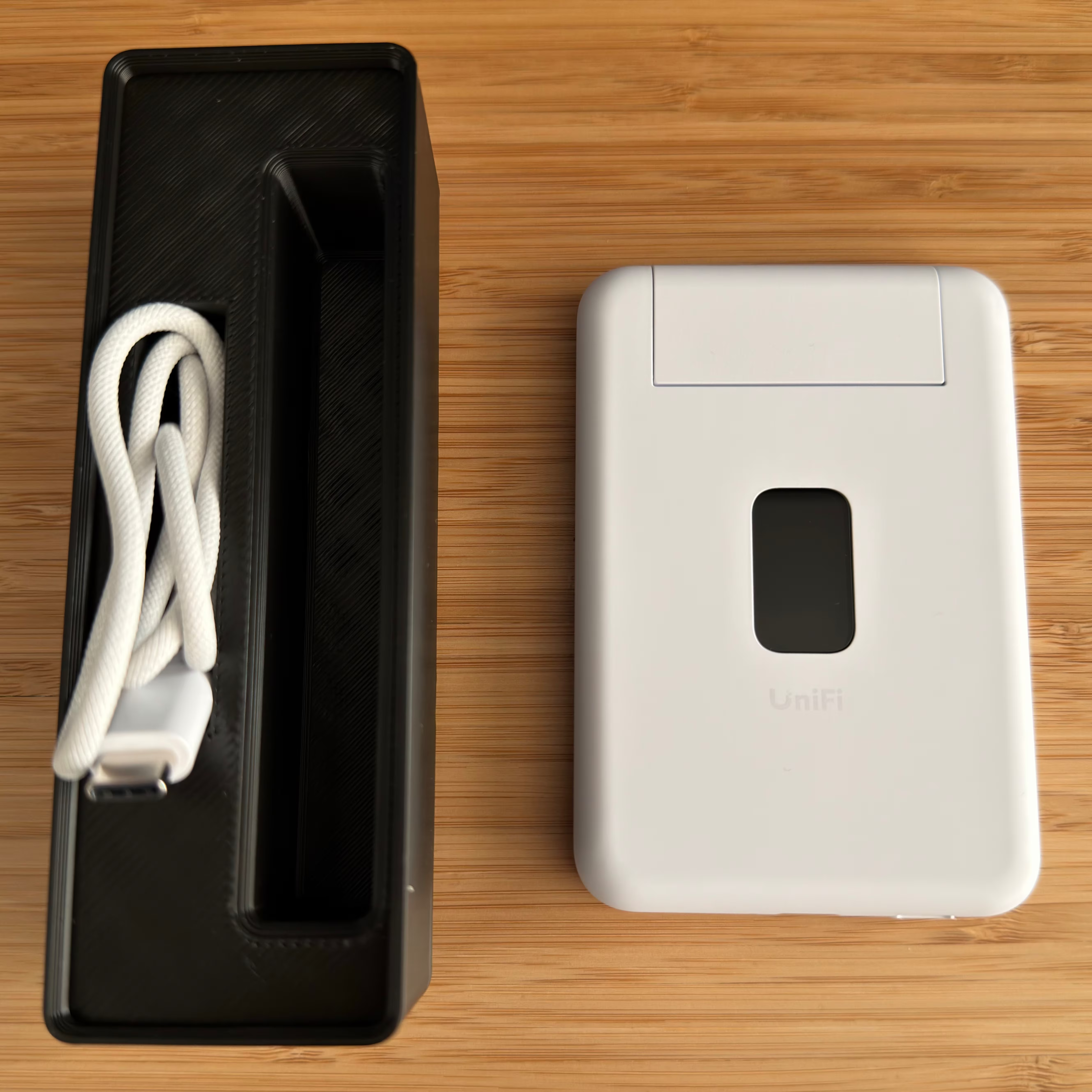
The real value isn’t speed… it’s predictability. My devices see the same network, internal policies, segmentation, and internally tunneled traffic. that they see at home.
The UTR is also incredibly small (the height of a credit card). I 3D-printed a Gridfinity-compatible holder for it to store in my server drawer, and I look forward to trying it out on my upcoming trips!
The following (stolen from Reddit) are some specific examples of why the UTR has advantages over my existing Tailscale VPN connectivity:
- You can run one VPN from the travel router and then all devices connecting via the travel router automatically run over the VPN protecting all traffic and DNS privacy from sniffers in the venue, the ISP or even potentially the government and applying such protections to devices that may not be able to run their own VPN (like a streaming device or game console) or just saving the hassle of having to separately connect each device to the VPN.
- You will appear to the host network as one single device (the travel router). So, if a venue is limiting you to one or two devices, this limit will not apply to you and you can have as many devices as you want on your travel router LAN while the venue sees only the single MAC address of the travel router.
- You can use devices on the network that don’t have the ability to get around the hotel/venue captive portal login (like a streaming device such as an Amazon Fire). This works because you use your phone browser or laptop browser once to get the travel router online and since that’s the only device the venue network ever directly sees, all the other devices working through the travel router just work without going through the capture portal gymnastics again.
- You can have your own private LAN where traffic between your devices does not flow beyond the travel router (probably applicable to business situations more than personal use).




Leave a Reply