The Handoff Process
Intraoperative handoffs of anesthesia care to other providers are commonplace whether it’s for breaks or at shift change. While there’s no “correct” way to do this, I’ve outlined the approach I take.


Intraoperative handoffs of anesthesia care to other providers are commonplace whether it’s for breaks or at shift change. While there’s no “correct” way to do this, I’ve outlined the approach I take.
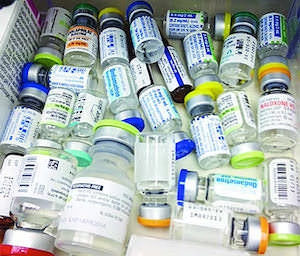
With nearly six months of anesthesia under my belt, I have a newfound respect for many of the drugs we administer intraoperatively… especially the potential dangers of insulin and protamine.

Upper extremity nerve blocks involve blocking the brachial plexus at different points – the major blocks are interscalene, supraclavicular, infraclavicular, and axillary. So how do we decide which blocks are appropriate for a given surgery? What are the pros/cons of certain blocks over others? First of all, let’s start with a…

Anesthesiologists are faced with a unique dilemma. We must quickly establish rapport with patients about to undergo surgery – undoubtedly one of the most anxiety-ridden events in their lives. It’s an art that’s easy to spot but far more difficult to teach. Just how do we persuade patients to literally…

This topic was actually brought up by a medical student who worked with me last week in the operating room. After seeing a unit of packed red blood cells hanging alongside a liter of normal saline on the IV pole, he asked how anesthesiologists know how much fluid to give…

Let’s review what a complete operating room anesthesia set up entails using the well known “MSMAIDS” mnemonic.

Peripheral intravenous (IV) access is utilized for volume resuscitation, medication administration, blood product transfusion, nutrition, lab draws, and many other reasons. It’s a skill which anesthesiologists perfect through experience but often poses a challenge to new trainees. Let’s discuss the basic set up and some tips.

One of the most essential skills of airway management is the ability to bag ventilate a patient. This can be a reassuring sign in the event of an otherwise difficult airway and is something to fall back on if intubation is unsuccessful. That being said, most people don’t want to…
Let’s start with a Wikipedia reference of medical abbreviations. A lot of these terms deal with the frequency of taking medications. Now, let’s analyze some common pairs: BID (twice a day) versus q12h (every 12 hours); TID (thrice a day) vs q8h (every 8 hours). There is certainly a difference!

Thromboelastography (TEG) is a simple way of assessing many parts of the coagulation cascade from primary and secondary hemostasis to fibrinolysis. Thrombus formation typically requires four components: platelets which form the initial hemostatic plug, clotting factors that reinforce the platelets, fibrin which serves as a hemostatic glue, and other clot-supporting…