• Reinforced Endotracheal Tubes

    Reinforced Endotracheal Tubes

    When I first started my anesthesiology training, I almost always used a reinforced endotracheal tube (ETT) for cases where my patient would be positioned prone for an extended period of time. One can imagine that in this position, even if the head is situated in a “prone pillow”, there’s a higher likelihood of…

    Read More

  • DNI Without DNR?

    DNI Without DNR?

    “Do not intubate” (DNI) and “do not resuscitate” (DNR) are two different entities. Often times a tenuous cardiopulmonary status or altered mentation requires securing the airway with endotracheal intubation well before full-on resuscitation with advanced cardiopulmonary life support (ACLS).

    Read More

  • Exchanging Endotracheal Tubes With A Cook Catheter

    Exchanging Endotracheal Tubes With A Cook Catheter

    When exchanging an endotracheal tube (ETT) for a new single lumen tube (SLT) or double lumen tube (DLT), a paramount concern is losing the patient’s airway. Most institutions use some form of an exchange catheter to facilitate ETT exchanges, and in my training thus far, Cook catheters have been the way…

    Read More

  • Difference Between MAC and Sedation

    Difference Between MAC and Sedation

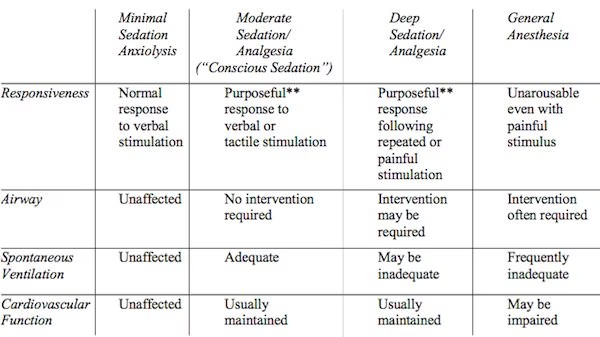
    In the perioperative arena, the terms “MAC” (monitored anesthesia care) and “sedation” are used interchangeably; however, they are not the same. The term MAC has nothing to do with levels of sedation (minimal, moderate, deep, and general anesthesia).

    Read More

  • Who Is Mallampati?

    Who Is Mallampati?

    Dr. S. Rao Mallampati is an anesthesiologist well known for creating one of the most widely accepted pre-operative airway assessments in clinical practice. His original paper correlates the “ability to visualize the faucial pillars, soft palate and base of uvula… as a means of predicting the degree of difficulty in…

    Read More