• Performing A “Deep” Extubation

    Performing A “Deep” Extubation

    A “deep” extubation refers to removing an endotracheal tube (ETT) or laryngeal mask airway (LMA) while the patient is still under anesthesia and their airway reflexes (ie, gag) have not returned. Although there are no absolute indications for deep extubation, it’s often performed in pediatric anesthesia, neurosurgery, and ENT cases…

    Read More

  • Laryngoscope Bite Block Guard

    Laryngoscope Bite Block Guard

    Dental injury is a risk of laryngoscopy – a procedure where the larynx is visualized usually with the intention of inserting an endotracheal tube. Laryngoscopes like the curved Mac blade and straight Miller blade are traditionally utilized to perform this task. In the modern era, more facilities have video laryngoscopes,…

    Read More

  • Double Lumen Endotracheal Tubes (DLT)

    Double Lumen Endotracheal Tubes (DLT)

    Double lumen endotracheal tubes (DLTs) are considered the gold standard for lung isolation – a procedure where we selectively ventilate a single lung or lobe. This is necessary to “protect” healthy lung tissue from hemorrhage or infection, isolate a bronchopleural fistula, perform unilateral lung lavage, or facilitate video-assisted thoracoscopic surgeries.

    Read More

  • Improving Lung Deflation With Bronchial Blockers

    Improving Lung Deflation With Bronchial Blockers

    Bronchial blockers allow us to perform lung isolation using a single lumen endotracheal tube. Compared to double-lumen tubes (DLTs) which are considered the gold standard for lung isolation and allow each lumen to be suctioned independently, bronchial blockers are often quite finicky as they migrate and make it difficult to…

    Read More

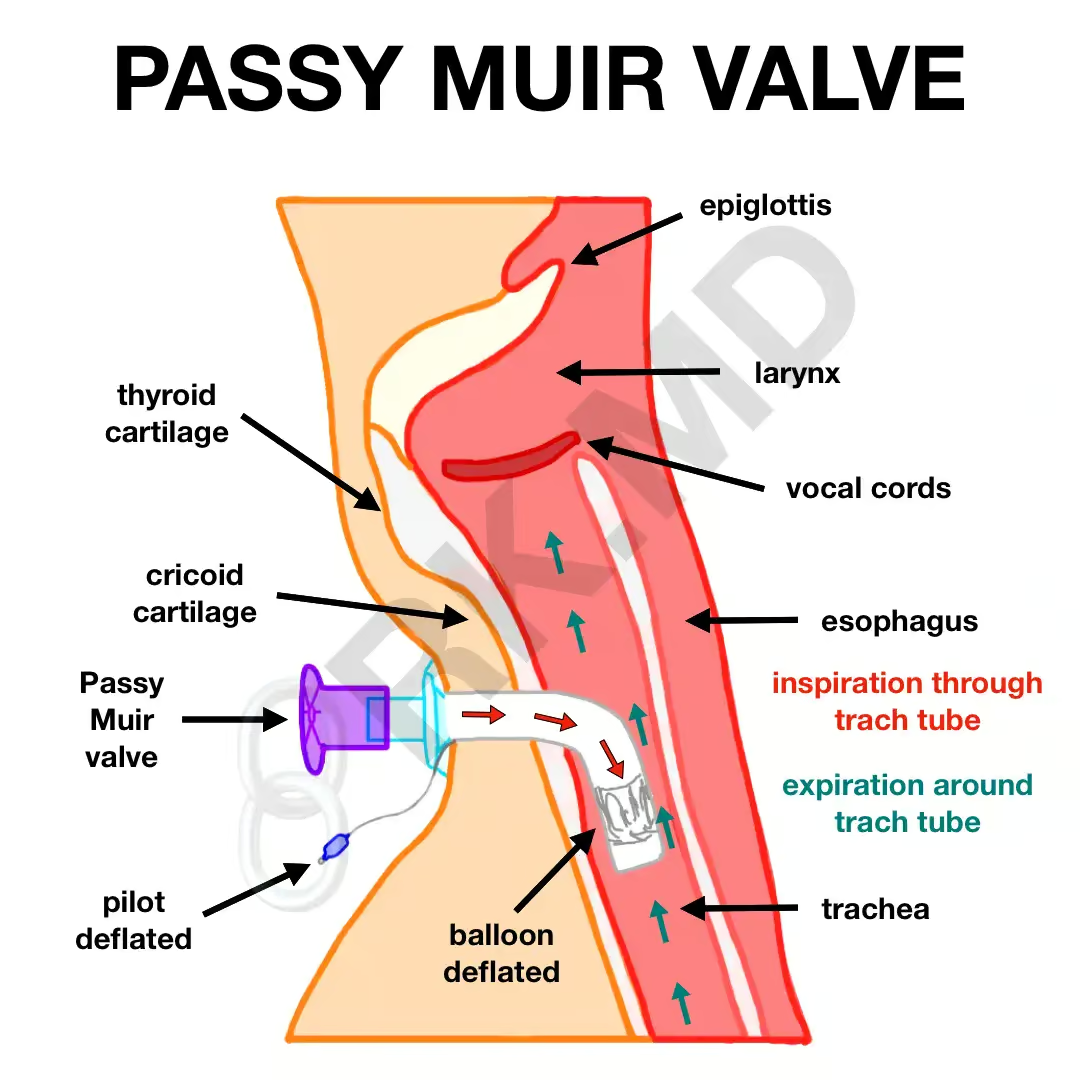
  • Passy Muir Valve

    Passy Muir Valve

    Normally, air moves in and out of tracheostomy tubes (trachs) below the level of the vocal cords rendering a patient aphonic. However, using a Passy Muir valve (PMV), otherwise known as a “speaking valve,” airflow is redirected through the vocal cords during expiration – our standard mechanism of phonation. This…

    Read More

  • Bronchopulmonary Segments

    Bronchopulmonary Segments

    Anatomically, the trachea extends from the cricoid cartilage (level of C6/C7) to the carina (T4/T5) and is reinforced anteriorly by approximately 20 semicircular, cartilaginous rings. The trachea divides into the right and left mainstem bronchi which further divide into secondary bronchi (RUL, RML, RLL, LUL, and LLL). Of note, the…

    Read More

  • Repairing Endotracheal Tube Cuffs

    Repairing Endotracheal Tube Cuffs

    Occlusive cuffs on endotracheal tubes (ETTs) allow us to “protect the airway.” Air/fluid is added and removed from this cuff through a pilot balloon (blue in the image below) which is connected to the cuff on the distal segment of an ETT via a thin, plastic tube. Several times during fellowship,…

    Read More

  • Extubation Criteria and Failure

    Extubation Criteria and Failure

    Extubation most commonly refers to removal of an endotracheal tube (ETT) to transition a patient back to spontaneous respiration; however, when is it appropriate to do so? How do we know the patient is ready and won’t require reintubation?

    Read More

  • Expanding Neck Hematoma Management

    Expanding Neck Hematoma Management

    Neck hematomas are a life threatening albeit rare post operative complication of surgeries in the cervical spine and neck (thyroidectomy, carotid endarterectomy, etc.) The overwhelming majority of patients who undergo these types of surgeries recover in the post-anesthesia care unit (PACU) and go home after meeting discharge criteria. 

    Read More

  • Awake Fiberoptic Intubation

    Awake Fiberoptic Intubation

    This month has been riddled with challenging airway situations, so I thought it would be a great opportunity to discuss how I perform awake fiberoptic intubations. The decision to intubate someone awake is rooted in the high likelihood that the patient will be a “difficult airway” for whatever reason. Keeping the…

    Read More