• Glucose Before Thiamine In Hypoglycemia

    Glucose Before Thiamine In Hypoglycemia

    “Thiamine before glucose” is a bedside teaching that started with a sound physiologic concept and slowly hardened into dogma when dealing with patients with alcohol use disorder. Thiamine deficiency underlies Wernicke encephalopathy, a preventable but often missed neurologic emergency most commonly seen in alcohol use disorder, malnutrition, prolonged vomiting, and…

    Read More

  • Olanzapine Versus Quetiapine In The ICU

    Olanzapine Versus Quetiapine In The ICU

    Olanzapine (Zyprexa) and quetiapine (Seroquel) are often discussed as if they are interchangeable sedating antipsychotics used to help with addressing facets of delirium (insomnia, emotional lability, etc.). It often feels like dealer’s choice when deciding which one to use. Here are some of my considerations as an intensivist. Olanzapine is…

    Read More

  • Andexxa Off The US Market

    Andexxa Off The US Market

    Andexanet alfa (Andexxa) will leave the US market on December 22, 2025, after AstraZeneca withdrew its biologics license application for commercial reasons. For a drug that costs as much as a car (~$25-50K per dose) and carries meaningful safety concerns… good riddance! Andexanet entered practice as the only FDA-approved reversal…

    Read More

  • Candida Auris (C. auris)

    Candida Auris (C. auris)

    Candida auris (C. auris) has become a significant challenge in critical care across the country. It spreads across surfaces, equipment, and even skin, allowing outbreaks to take hold long before they are detected. These infections tend to appear in patients with comorbidities like advanced age, diabetes, kidney disease, malignancy, dialysis…

    Read More

  • NxStage System One CRRT Display

    NxStage System One CRRT Display

    The NxStage System One continuous renal replacement therapy (CRRT) system provides convective and diffusive clearance through a simplified cartridge system. It has an interface centered on three large, color-coded numeric fields that offer the most essential information for therapy. When I’m rounding in the CVICU, I often look at these…

    Read More

  • Hydroxocobalamin vs. Methylene Blue for Vasoplegia After Cardiac Surgery

    Hydroxocobalamin vs. Methylene Blue for Vasoplegia After Cardiac Surgery

    As a cardiac anesthesiologist and intensivist, vasoplegia following cardiopulmonary bypass is an issue I often face in the OR and ICU. This distributive shock phenotype is characterized by low systemic vascular resistance, despite preserved or elevated cardiac output, primarily driven by dysregulated nitric oxide (NO) and guanylate cyclase signaling, which…

    Read More

  • POCUS Lung B-Lines

    POCUS Lung B-Lines

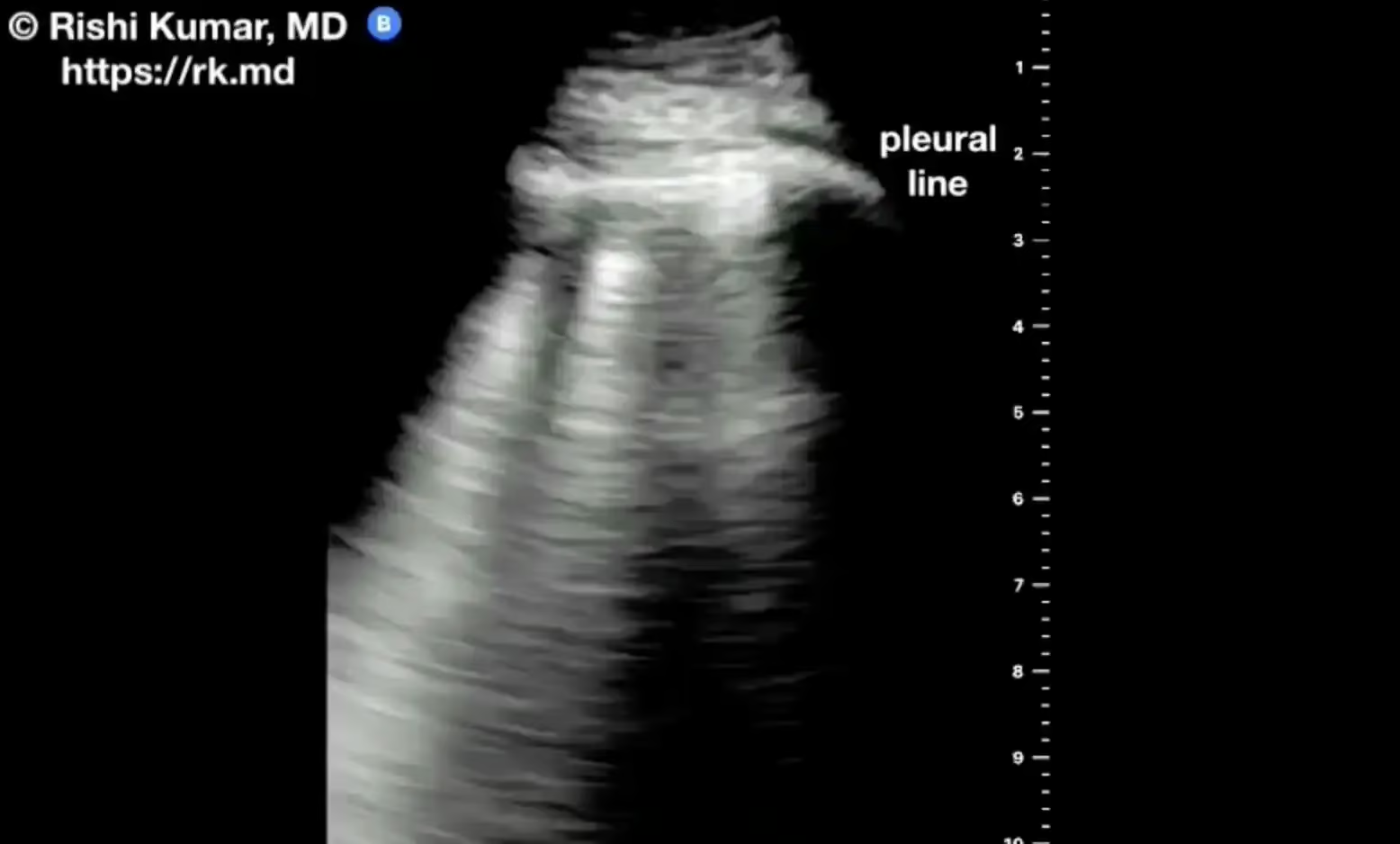
    B-lines are a vertical “comet-tail” artifact seen on lung ultrasound. They represent interstitial edema or increased lung water in thickened subpleural interlobular septa. In other words, B-lines represent fluid in the lungs (e.g., pulmonary edema, heart failure, etc.). When performing lung ultrasound, I use a high-frequency linear probe and begin…

    Read More

  • ECG Lead II And Volume Responsiveness – The Brody Effect

    ECG Lead II And Volume Responsiveness – The Brody Effect

    The Brody effect highlights the relationship between intracavitary blood volume and the heart’s electrical activity, which, in turn, offers a dynamic tool to gauge volume responsiveness. Since blood is an excellent conductor of electricity, variable preload can lead to variable ECG readings, namely the amplitude of the R-wave in lead…

    Read More

  • Neostigmine For Postoperative Ileus

    Neostigmine For Postoperative Ileus

    As a cardiovascular ICU intensivist, postoperative ileus (POI) is a condition I deal with frequently following laparotomies and even abdominal aorta endovascular repairs with gut dysmotility, inflammation, and neural inhibition all contributing. If conventional “bowel regimen” therapies (ambulation, enemas, etc.) fail, and I’m convinced the pathology is colonic pseudo-obstruction (not a mechanical obstruction), I’ll consider…

    Read More

  • Estimating Intraabdominal Pressure With Bladder Pressure

    Estimating Intraabdominal Pressure With Bladder Pressure

    Intraabdominal hypertension (IAH) and abdominal compartment syndrome are defined as sustained intraabdominal pressure (IAP) ≥ 12 mmHg and > 20 mmHg with new organ dysfunction, respectively. This can be challenging to diagnose in patients who are pregnant, obese, or with ascites. Bladder pressure from a Foley catheter can be used…

    Read More