
As a cardiac anesthesiologist and intensivist, vasoplegia following cardiopulmonary bypass is an issue I often face in the OR and ICU. This distributive shock phenotype is characterized by low systemic vascular resistance, despite preserved or elevated cardiac output, primarily driven by dysregulated nitric oxide (NO) and guanylate cyclase signaling, which promotes pathologic vasodilation and catecholamine resistance.

Two agents are frequently used when catecholamines fail: methylene blue (MB) and hydroxocobalamin (Cyanokit). MB inhibits endothelial nitric oxide synthase and soluble guanylate cyclase, attenuating the conversion of GTP to cyclic GMP, a potent vasodilatory pathway. This results in increased vascular smooth muscle tone and improved catecholamine responsiveness. Cyanokit directly scavenges nitric oxide and hydrogen sulfide, both of which contribute to refractory vasodilation, and may enhance redox balance in vascular smooth muscle.
A 2024 systematic review and meta-analysis by Cadd et al. pooled data from 263 patients across four retrospective studies. At one hour post-administration, there was no significant difference in vasopressor requirements between MB and hydroxocobalamin. Hydroxocobalamin was associated with a modest increase in mean arterial pressure and lower vasopressor doses at 1 and 6 hours, but no improvement in systemic vascular resistance or mortality.
These findings align with prior analyses, which have shown that both agents improve hemodynamics and reduce vasopressor needs; however, neither demonstrates a clear survival or organ-protective benefit. MB has more historical data and may offer an earlier onset and potential mortality benefit in some series. At the same time, hydroxocobalamin may exert a more sustained vasopressor-sparing effect, possibly due to its longer plasma half-life and additional hydrogen sulfide scavenging.
Often, I find myself using both… and seeing some awesome-looking urine colors afterwards as in the pictured Foley above.
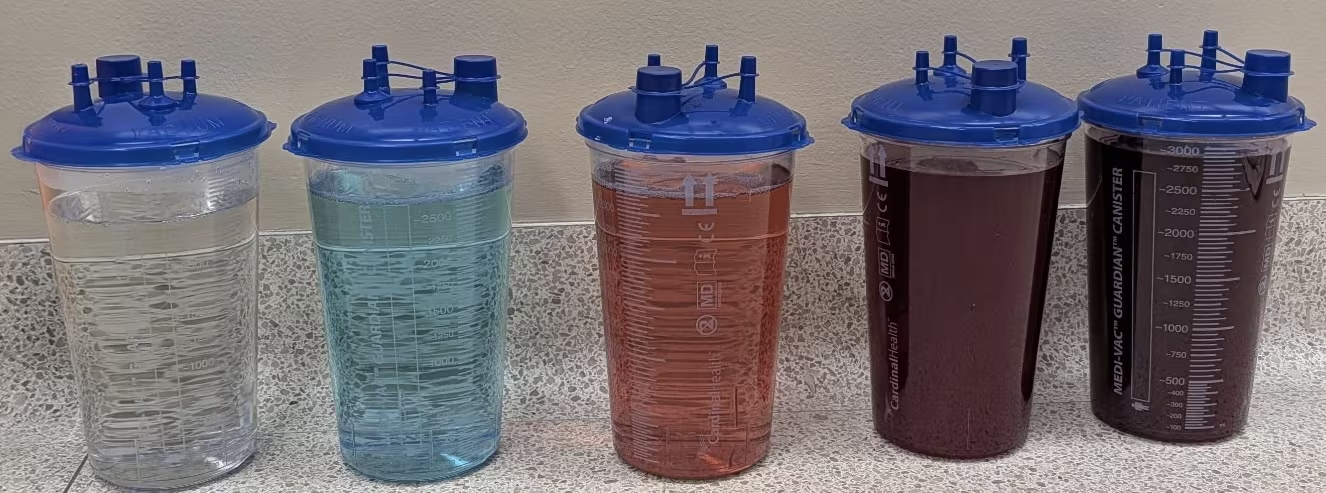
Also, shout-out to Dr. Warren Choi for the following image. It shows sequential ultrafiltrate samples after administering methylene blue followed by hydroxocobalamin on cardiopulmonary bypass. The color changes are pretty remarkable and offer a nice visual reminder that these agents can have some dramatic effects beyond the blood pressure.


Leave a Reply