
• Aldactone and Lasix in Cirrhosis

    Aldactone and Lasix in Cirrhosis

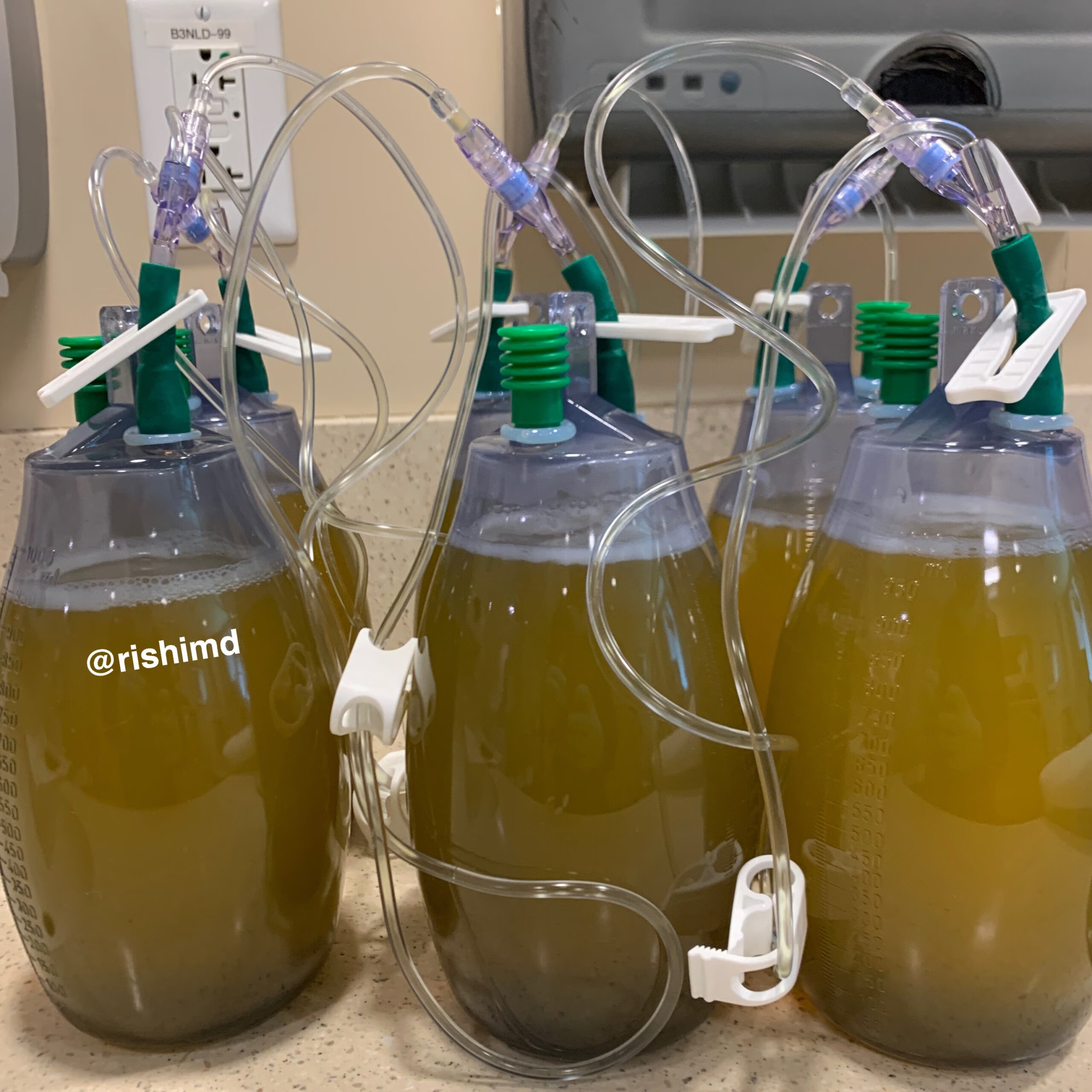
    After all the patients I’ve seen with ascites secondary to hepatic cirrhosis, I wondered why we tend to start them on 100 mg Aldactone (spironolactone) with a 40 mg Lasix (furosemide) adjuvant. What’s the rationale behind this ratio? What’s the added benefit of using two different kinds of diuretics to…

    Read More

  • First Week at St. Luke’s

    I’m on the gastroenterology consult service at St. Luke’s Episcopal Hospital (SLEH) for the second month of my internal medicine rotation. Last month, Ben Taub General Hospital (BTGH) provided me with the team-centered, primary caretaker view for the uninsured/homeless/EC population. Now I’m learning about the world of specialized consult services…

    Read More

  • Last Day of IM at Ben Taub

    Yesterday marked the end of my first month of clinics – 21 amazing days of internal medicine at Ben Taub. In February, I’ll be at St. Luke’s working on a consult service to be determined Monday. We were allowed to “request” a service (general medicine, heme-onc, infectious disease, etc.) ahead…

    Read More

  • Cost and Efficacy of Negative Pressure Wound Therapy

    Negative pressure wound therapy (NPWT) is a form of wound care which utilizes a vacuum to create a suction interface at the site of the injury. It’s being utilized in all sorts of scenarios ranging from pressure sores and post-op wounds to open abdominal wounds and injuries with bone exposure.

    Read More

  • Laparoscopic vs Open Surgery in Crohn’s

    If there’s one thing I’ve learned on my internal medicine rotation, it’s that the differential for “abdominal pain” is about a mile long. It helps when the pain can be localized to one of the abdominal quadrants, but when it’s a diffuse, constant discomfort… yeah… lots of possibilities.

    Read More

  • Cryptococcal Meningitis

    The meninges are layers of tissue which envelope the surface of the brain and spinal cord and carry a lot of the superficial vasculature which feeds the central nervous system. When these tissues become irritated or infected, the resulting inflammation is called meningitis. There are many infectious organisms associated with…

    Read More

  • Internal Med – Two Weeks In

    Today marks the end of my second week of internal medicine. I’m laying in bed huddled under my comforter while contemplating medical scenarios I’m uncertain how to deal with.

    Read More

  • Delirium and Loved Ones

    Delirium is a neuropsychiatric condition characterized by an acute, fluctuating course, and changes in one’s arousal and attention span. In other words, a patient may seem fine in the morning, have virtually no attention span during afternoon rounds, and be back to normal by dinner time. Conditions like Alzheimer’s are…

    Read More

  • CHF and Coloring

    Congestive heart failure (CHF) is a two-part disease: “congestive” and “heart failure.” By definition, heart failure means that the heart is unable to pump sufficient quantities of blood to the rest of the body. “Congestive” refers to the vasculature being engorged with fluid causing it to essentially back up in…

    Read More

  • First Week of Clinics

    I had to wait till Sunday to write this post. Why? Because the first week of clinics included being “on-call” on Saturday for my internal medicine team. This really is different from the basic science curriculum. :shock:

    Read More