• Drawbacks Of Pressure-Regulated Volume Control (PRVC)

    Drawbacks Of Pressure-Regulated Volume Control (PRVC)

    Pressure-regulated volume control (PRVC) is an adaptive mode of ventilation that attempts to achieve set tidal volume at the lowest possible inspiratory airway pressure by using breath-to-breath feedback to adjust flow. Because it theoretically combines the best of pressure control (variable flow) and volume control (guaranteed minute ventilation) modes, PRVC…

    Read More

  • Driving Pressure

    Driving Pressure

    Driving pressure (Pdriving) is related to tidal volume (VT) and the respiratory system’s static compliance (Crs). At the bedside, Pdriving = plateau pressure (Pplat, determined by an inspiratory hold maneuver) minus PEEP. Based on the boxed equation in the diagram and assuming all other variables remain constant, increasing VT or…

    Read More

  • Average Volume Assured Pressure Support (AVAPS)

    Average Volume Assured Pressure Support (AVAPS)

    In a conventional spontaneous/timed (S/T) mode, one directly sets an inspiratory positive airway pressure (IPAP) and expiratory positive airway pressure (EPAP) to address issues with ventilation and oxygenation, respectively. Remember, pressure support = IPAP – EPAP. In contrast, average volume assured pressure support (AVAPS) is a mode with variable pressure…

    Read More

  • Oxygen Therapy Systems

    Oxygen Therapy Systems

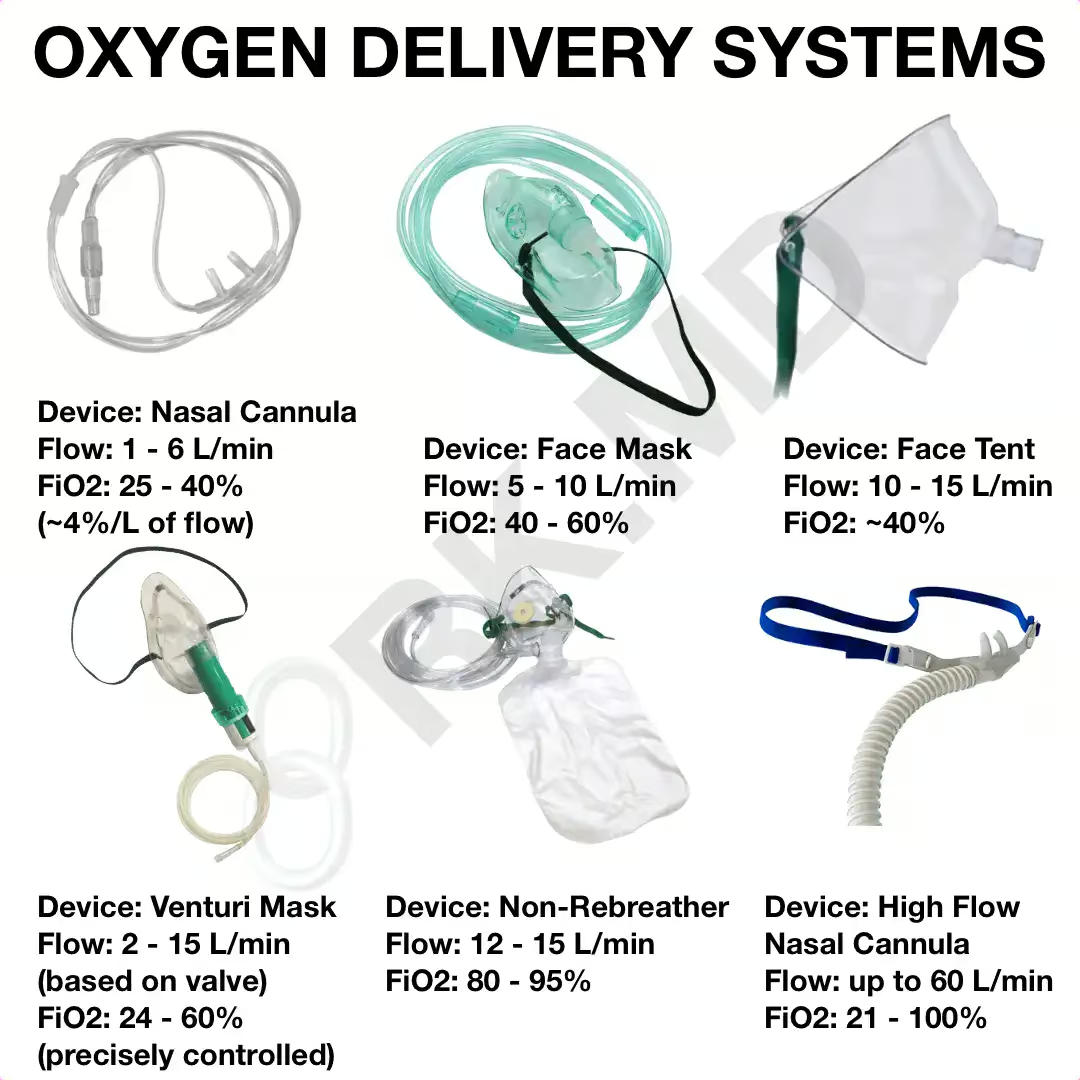
    When discussing options for hypoxemia, there seem to be so many noninvasive oxygen delivery systems! Nasal cannula, high flow nasal cannula (HFNC), non-rebreathers (NRB), and more are routinely used in the settings I’ve worked in.

    Read More

  • Volume Control (VC) Versus Volume Control Auto Flow (VC-AF)

    Volume Control (VC) Versus Volume Control Auto Flow (VC-AF)

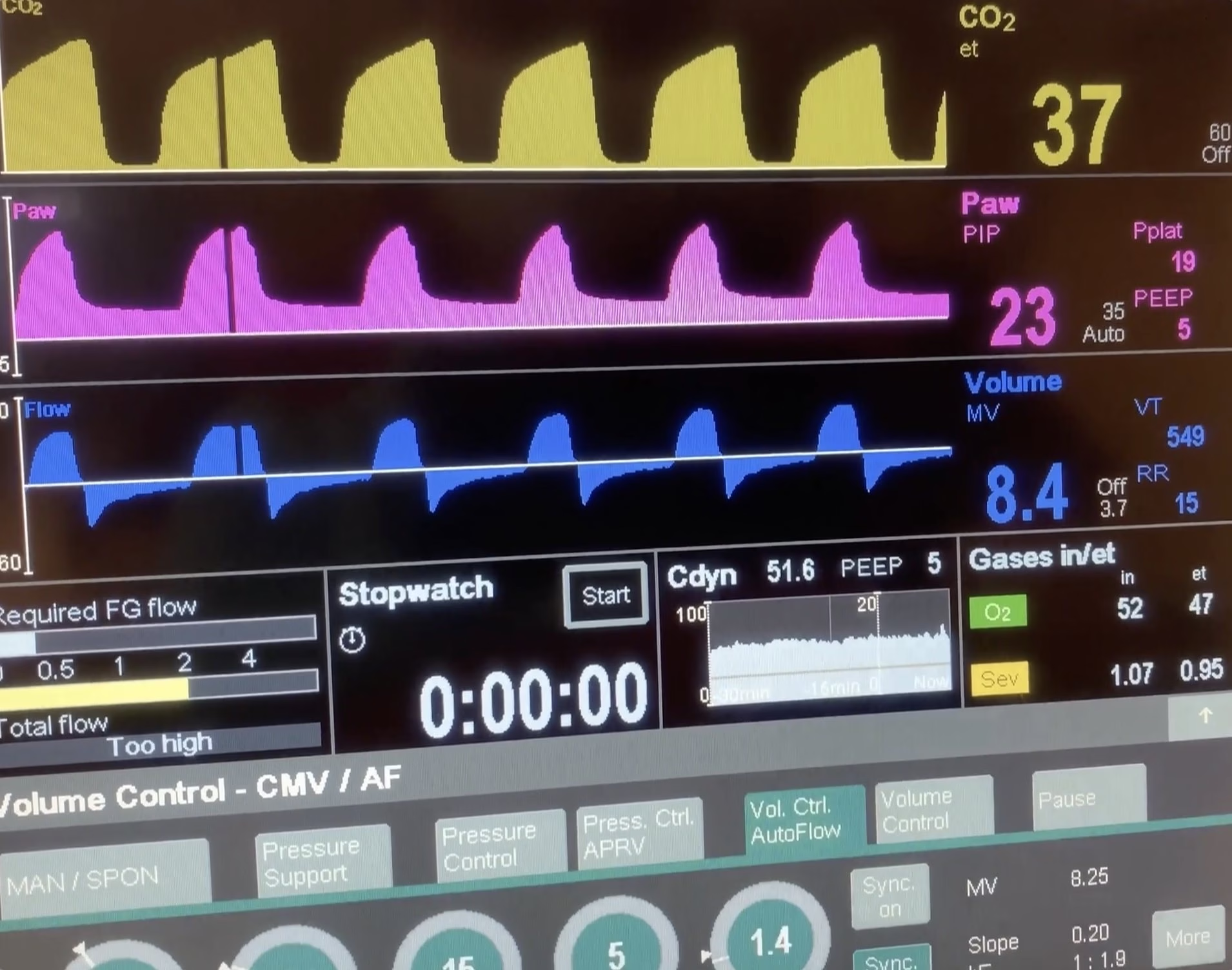
    Assist-control (AC) ventilation is traditionally categorized into two types: pressure-control (PC), where an inspiratory pressure is set, and volume-control (VC), where a target tidal volume is set. Both styles of ventilation allow parameters like the fraction of inspired oxygen (FiO2), respiratory rate (RR), and positive end-expiratory pressure (PEEP) to be…

    Read More

  • Automatic Tube Compensation (ATC)

    Automatic Tube Compensation (ATC)

    Daily spontaneous breathing trials (SBT) for patients receiving mechanical ventilation are considered standard-of-care across intensive care units (ICUs); however, when we discuss weaning strategies, there’s a bit more variability. Many intensivists opt for putting the patient on “minimals”: 5 cm H2O of inspiratory pressure support (PS) on top of 5…

    Read More

  • Basics Of Mechanical Ventilation

    Basics Of Mechanical Ventilation

    Understanding mechanical ventilation is a fundamental part of intensive care and perioperative medicine. Here’s an overview of the basics. Keep in mind that clinically, there are many more things to consider, exceptions to rules, hybrid ventilator modes, and other strategies that I will not cover for the sake of maintaining…

    Read More

  • Positive End Expiratory Pressure (PEEP) and Cardiac Output

    Positive End Expiratory Pressure (PEEP) and Cardiac Output

    One of the cardiopulmonary challenges I constantly face as a cardiothoracic anesthesiologist and intensivist is balancing positive end-expiratory pressure (PEEP) with cardiac output (CO). CO is related to the heart rate (HR) and stroke volume (SV), the latter of which is related to preload, afterload, ventricular compliance, and contractility. Although…

    Read More

  • High Flow Nasal Cannula (HFNC)

    High Flow Nasal Cannula (HFNC)

    High flow nasal cannula (HFNC) systems allow us to deliver warm, humidified oxygen at flow rates as high as 60 liters/min through small, pliable nasal prongs. The cannula itself is fit into the nares and stabilized with a head strap. Two parameters are set – the flow rate and FiO2.…

    Read More

  • Interpreting Capnograms

    Interpreting Capnograms

    Continuous capnography (measurement of carbon dioxide) is the gold standard for confirming endotracheal tube placement but is also utilized in the operating room and intensive care unit (ICU) to help guide ventilation in conjunction with blood gases.

    Read More