
Gerbode defects create an abnormal communication between the high-pressure left ventricle (LV) and the right atrium (RA), thereby completely bypassing the right ventricle. That pathway sets up a distinctive left-to-right shunt with hemodynamics that can be subtle or profoundly destabilizing, depending on the size of the communication and the clinical context.
I think about Gerbode defects in two broad categories. The direct variant represents direct LV-to-RA communication through the membranous septum, without involvement of the tricuspid valve. The indirect variant behaves more like a ventricular septal defect, routing blood across an abnormal tricuspid valve apparatus. In either case, left-sided pressure is transmitted into the RA, increasing volume load and promoting progressive dilation of the right heart. Patients may remain asymptomatic for years or present with fatigue, dyspnea, arrhythmias, or signs of right-sided failure. In the ICU, acquired forms can follow endocarditis, valve surgery, or myocardial injury, which always raises the stakes in an already complex setting.
Echocardiography remains the most helpful method for identifying these defects. A high velocity jet directed from the LV toward the RA can masquerade as tricuspid regurgitation or a perimembranous ventricular septal defect unless you carefully track its origin and direction. Color-flow Doppler in the following midesophageal RV inflow-outflow TEE view shows the high velocity jet from the aortic valve apparatus directly into the RA

Doppler signals usually track more closely to systemic pressure than to gradients across the tricuspid valve. When the anatomy is unclear or the shunt is complex, cardiac MRI and CT offer helpful clarity and quantify the chamber burden. Hemodynamics through catheterization can further define the shunt fraction and right-sided pressures.
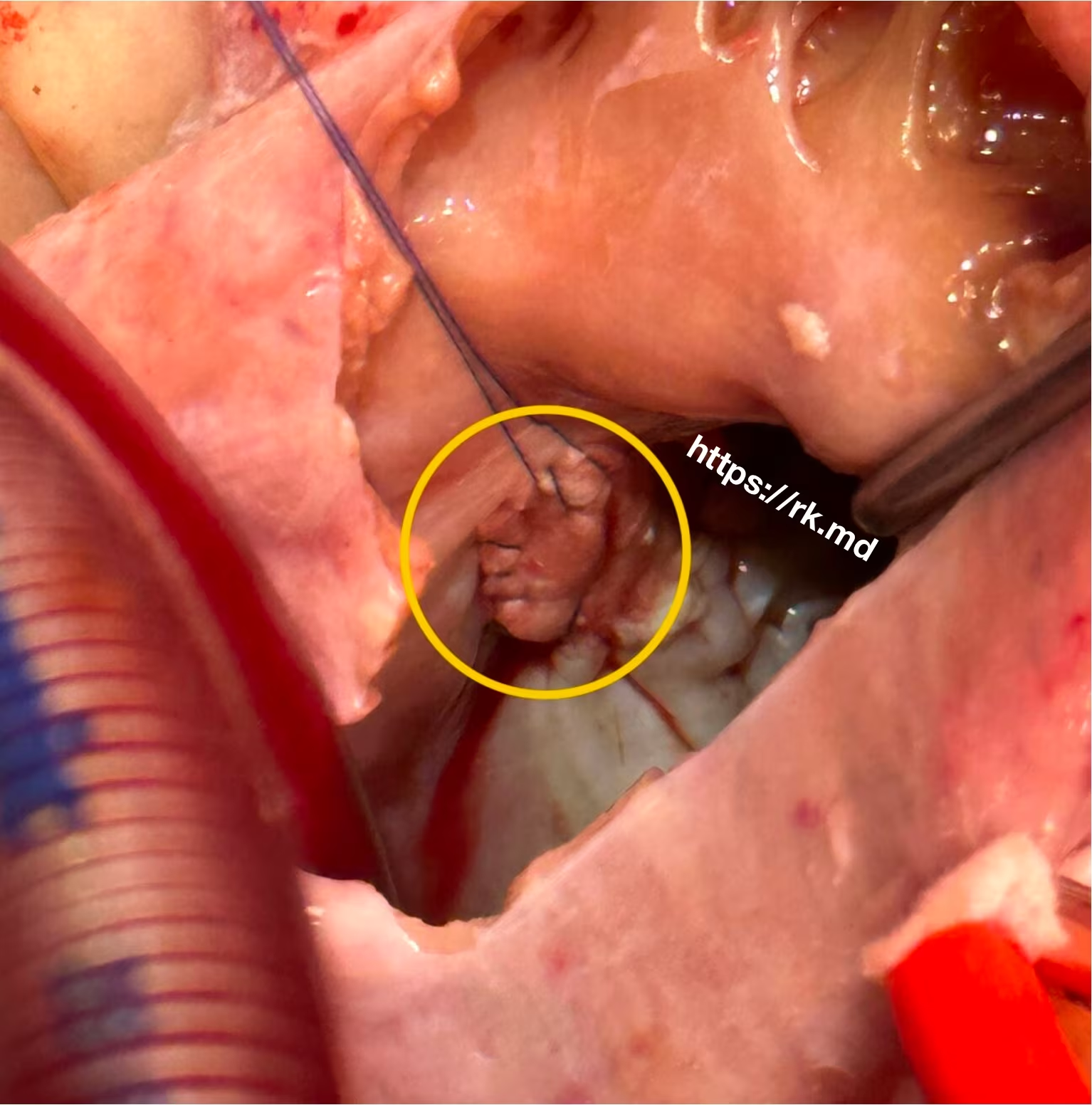
Management ranges from observation to complete surgical repair. Small, asymptomatic defects can be followed clinically and with serial imaging. Larger defects, progressive right heart dilation, symptoms that limit activity, or associated complications usually prompt consideration for surgical closure. Select anatomies may be amenable to percutaneous closure, especially in acquired defects with discrete margins. The following is a right atrial perspective of a surgical patch closure of a Gerbode defect.


Leave a Reply