
Pump controlled retrograde trial off (PCRTO) is a weaning technique for venoarterial ECMO (VA-ECMO) in which pump speed is gradually decreased until net retrograde flow develops from the arterial to the venous limb of the circuit. This maneuver suspends mechanical circulatory support without decannulation, offering a real-time, physiologic test of native cardiac function while preserving circuit integrity and enabling immediate resumption of support if needed.
Unlike conventional weaning which involves stepwise pump speed/flow reduction or AV-bridging, PCRTO avoids circuit manipulation and minimizes the risk of air entrainment or thrombus dislodgement. It’s reversible, repeatable, and allows us to provide a “stress test” to the cardiopulmonary system under near-normal loading conditions. This can also help us determine if the lungs are also providing enough gas exchange support to bridge off VA-ECMO entirely or, if need be, reconfigure to VV-ECMO.
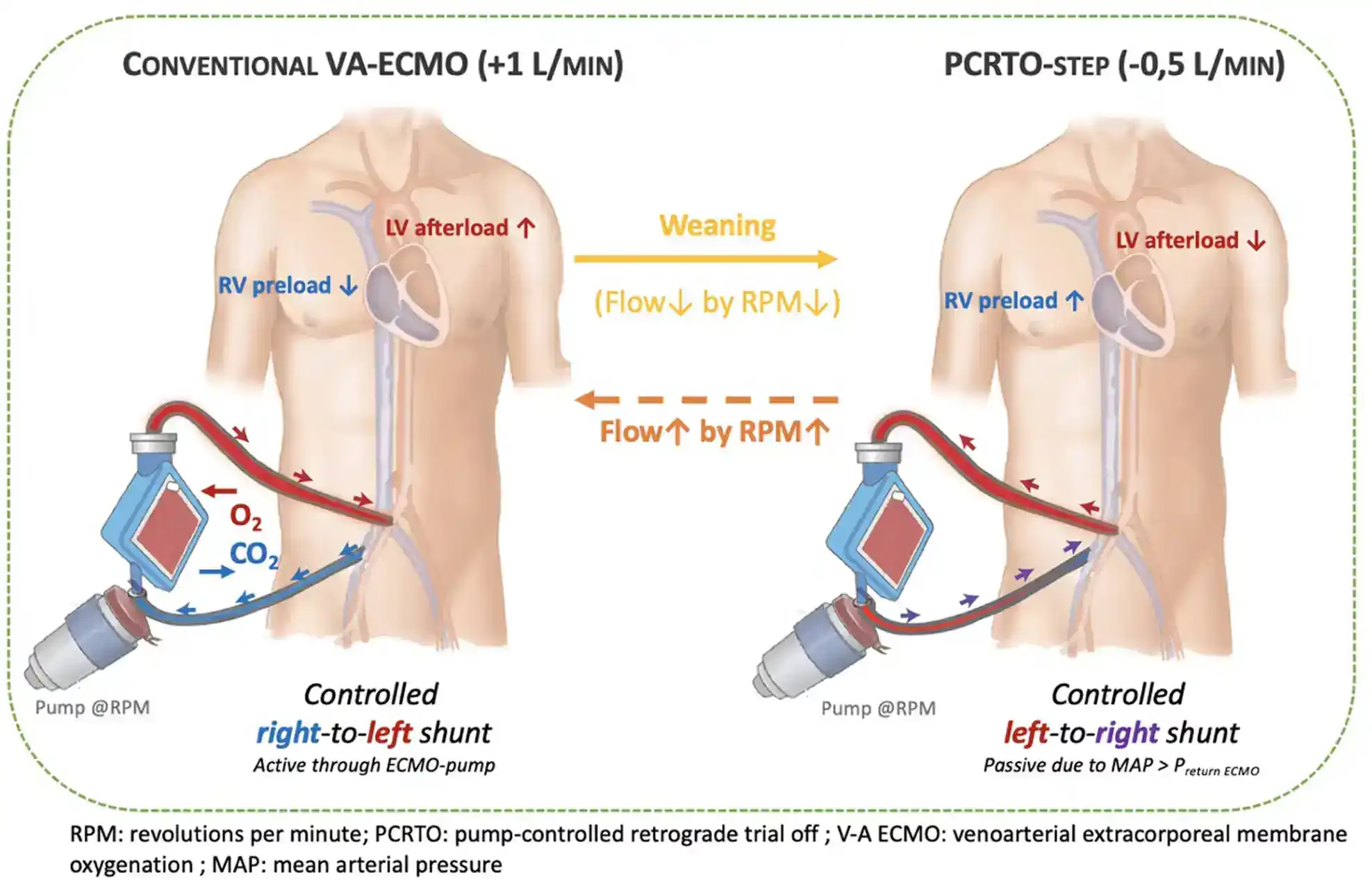
Ideal candidates for weaning have stable hemodynamics (MAP >60 mmHg with minimal vasoactive support), improving end-organ function (e.g., lactate clearance, adequate urine output), and evidence of myocardial recovery (e.g., LVEF >20–25%, aortic VTI >10–12 cm, preserved RV function) on echocardiography. The data (albeit limited to case series and retrospective reports) also attest to the safety and effectiveness of using PCRTO to guide the decision to wean from ECMO (check out PMIDs 37012220, 28737596, 36518179, and 30698769).
Have you seen PCRTO utilized at your institution?


Leave a Reply