• First Three Weeks of Obstetric Anesthesiology

    First Three Weeks of Obstetric Anesthesiology

    Its become very evident that obstetric anesthesiology is an entirely different animal compared to my other rotations. I haven’t intubated anyone in three weeks. All my patients are relatively young, pregnant women. I haven’t even seen a vial of propofol in a week! For various reasons, the preferred means of anesthesia for parturients remains…

    Read More

  • Beginning Obstetric Anesthesiology

    Beginning Obstetric Anesthesiology

    Today marks my first true day of my two month obstetric anesthesia rotation, and what a way to kick it off – weekend call! I’ll have roughly 60 days to master the art of neuraxial anesthetics (epidurals, spinals, and combined spinal-epidurals), maternal and fetal physiology, obstetric emergencies, medications (methergine, hemabate,…

    Read More

  • Patients and Protocols

    Patients and Protocols

    Protocols and checklists are routinely used in healthcare to avoid oversights and preventable mistakes. In the perioperative setting, there are multiple hard stops to prevent dangerous mistakes (ie, doing the wrong operation on the wrong patient). The more I grow as a resident physician anesthesiologist, the more I appreciate the importance…

    Read More

  • CA-1 Resident Poster Symposium

    CA-1 Resident Poster Symposium

    For the last several years, our program has hosted an annual anesthesiology poster symposium where CA-1 (PGY-2) residents discuss interesting cases or topics in anesthesiology. I presented an overview of anesthetic/surgical considerations in penetrating neck trauma yesterday morning. At our level 1 trauma center, my colleagues and I have been involved…

    Read More

  • Preparation for the ABA Basic Board Exam

    Preparation for the ABA Basic Board Exam

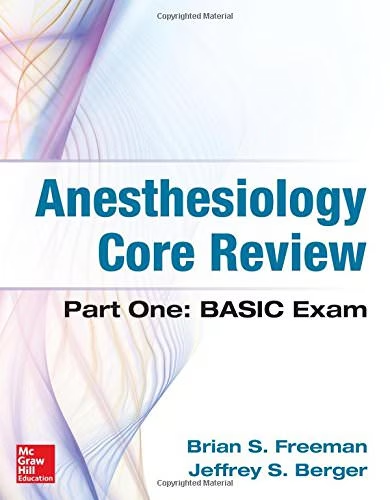
    Current 2nd year anesthesia residents around the country will be the second group to take the American Board of Anesthesiology’s (ABA) “basic” exam (basically, the first half of our board exams) between our CA-1 and CA-2 years. Here’s an excerpt taken straight from the ABA website: The ABA’s BASIC Examination…

    Read More

  • National Doctor’s Day 2015

    National Doctor’s Day 2015

    Yesterday was National Doctor’s Day, a day dedicated to recognizing the service of physicians. Interestingly enough, the date (March 30th) is the anniversary of the first use of general anesthesia in surgery. Hooray for old school ether anesthesia!

    Read More

  • Most Well-Rounded Call Thus Far

    Most Well-Rounded Call Thus Far

    I was dreading night call on a Friday (the 13th, never the less) at the trauma hospital. Typically the shift is full of people who were involved in violence or reckless behavior – alcohol causes people to do dumb things. Instead, this call shift happened to be my most well-rounded…

    Read More

  • Second CA-1 Airway Month

    Second CA-1 Airway Month

    I’m well into this month (a second month dedicated to managing difficult airways) which has been filled with call shifts thus far. I wanted to outline some minor updates since my last post. Tassadar was offline for over a month (it wouldn’t power on), and I finally had some time…

    Read More

  • Who Do We Save?

    Who Do We Save?

    Trauma anesthesia is a whole different game – you never know what could roll through the door at a moment’s notice. Some patients are innocent victims of car accidents, crossfire, or simply being in the wrong place at the wrong time. Others were injured while engaging in criminal activity. As…

    Read More

  • Onto CA-1 Cardiac Anesthesia!

    Onto CA-1 Cardiac Anesthesia!

    As a first year anesthesia resident, I’ve already done roughly 10 cases requiring cardiopulmonary bypass (all of which had Swan-Ganz catheters too), but now I’m officially starting my dedicated “cardiovascular” (CV) week.

    Read More