• Isosorbide Mononitrate Versus Dinitrate

    Isosorbide Mononitrate Versus Dinitrate

    Isosorbide mononitrate (Imdur, ISMN) and isosorbide dinitrate (Isordil, ISDN) are two nitrates used to induce venodilation and alleviate angina pectoris, but they differ in their pharmacokinetics and clinical applications. Both ISMN and ISDN are prodrugs that undergo biotransformation to release nitric oxide (NO). This occurs more directly in ISMN, whereas…

    Read More

  • Karius Test

    Karius Test

    The Karius test is a liquid biopsy that leverages next-generation sequencing to identify and quantify microbial cell-free DNA (cfDNA) from over 1,500 pathogens, including bacteria, DNA viruses, fungi, and parasites. Traditional infectious disease diagnostic methods, including blood cultures, serologies, and polymerase chain reaction (PCR) assays, face limitations in sensitivity, specificity, and the time…

    Read More

  • Aprepitant

    Aprepitant

    Aprepitant (Emend) is a potent, oral antiemetic used to prevent chemotherapy-induced nausea and vomiting (CINV) and postoperative nausea and vomiting (PONV). Fosaprepitant is a prodrug of aprepitant, with the benefit that it can be administered intravenously for patients who are too nauseous to reliably take oral aprepitant. Aprepitant specifically targets and inhibits NK1 receptors,…

    Read More

  • Abnormal Arterial Waveforms

    Abnormal Arterial Waveforms

    Understanding abnormal arterial waveforms is crucial in diagnosing various cardiovascular conditions. These waveforms, visualized through arterial pressure tracings, provide insight into the mechanical performance of the heart and the vascular system. Here are some common abnormal arterial waveforms: Pulsus bisferiens has two distinct systolic peaks (or the second in early…

    Read More

  • Kommerell Diverticulum

    Kommerell Diverticulum

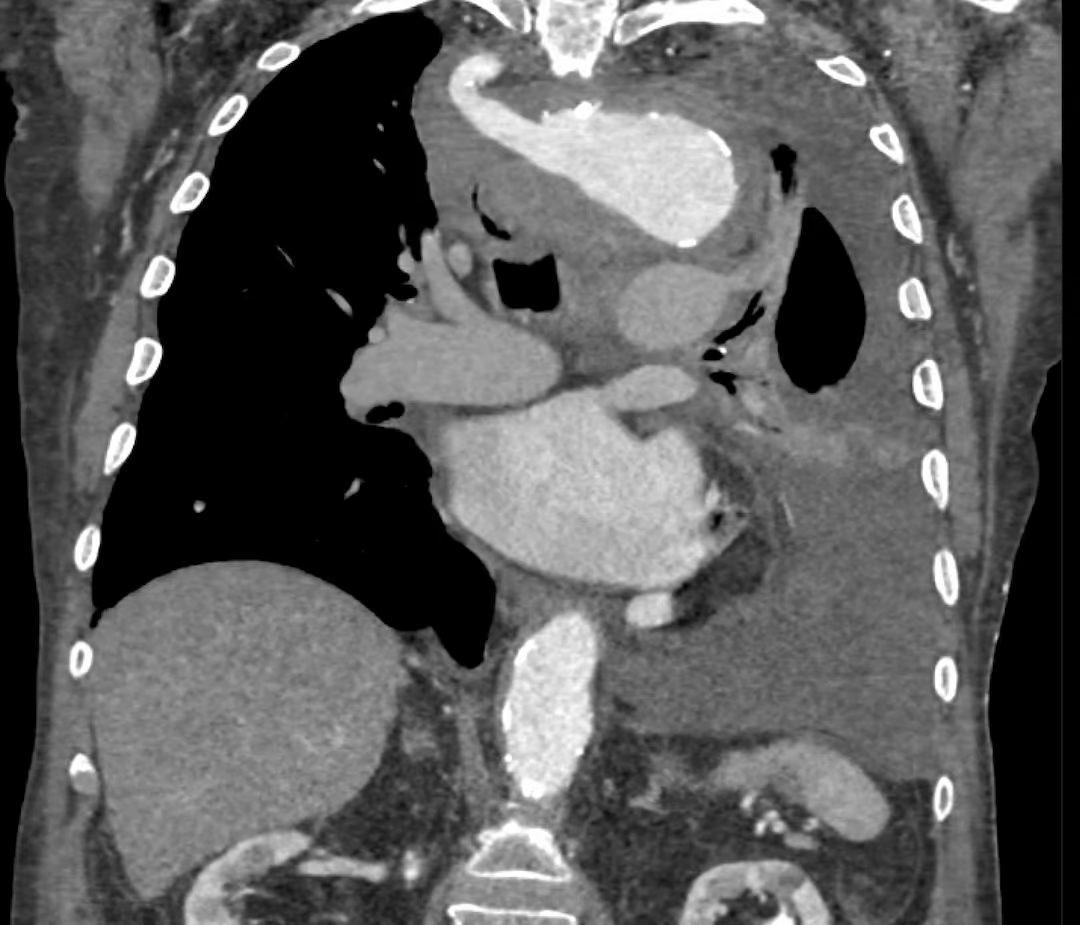
    Kommerell diverticulum (KD) is a rare vascular anomaly typically involving a right-sided aortic arch with an aberrant left subclavian artery. However, variations like a left-sided arch with an aberrant right subclavian artery exist. This condition results from the persistence of an embryonic vascular remnant – the dorsal segment of an…

    Read More

  • Marfan Syndrome

    Marfan Syndrome

    Marfan syndrome is a genetic condition primarily caused by mutations in the fibrillin-1 (FBN1) gene, which encodes a glycoprotein component of connective tissue. The manifestations of Marfan syndrome result from weakened connective tissues. These include everything from ocular (lens dislocation, retinal detachment, myopia) and cardiovascular (aortic aneurysm, aortic dissection, mitral…

    Read More

  • Swan-Ganz Catheter Stuck Post-Operatively

    Swan-Ganz Catheter Stuck Post-Operatively

    In this fluoroscopy clip, one appreciates that attempting to remove a Swan-Ganz catheter results in traction near the cavoatrial junction. Ultimately, the Swan had to be removed through a small right atriotomy, revealing that the catheter was trapped by a stitch. It just goes to show that if something isn’t…

    Read More

  • 2° AV Block – Mobitz I (Wenckebach) ECG

    2° AV Block – Mobitz I (Wenckebach) ECG

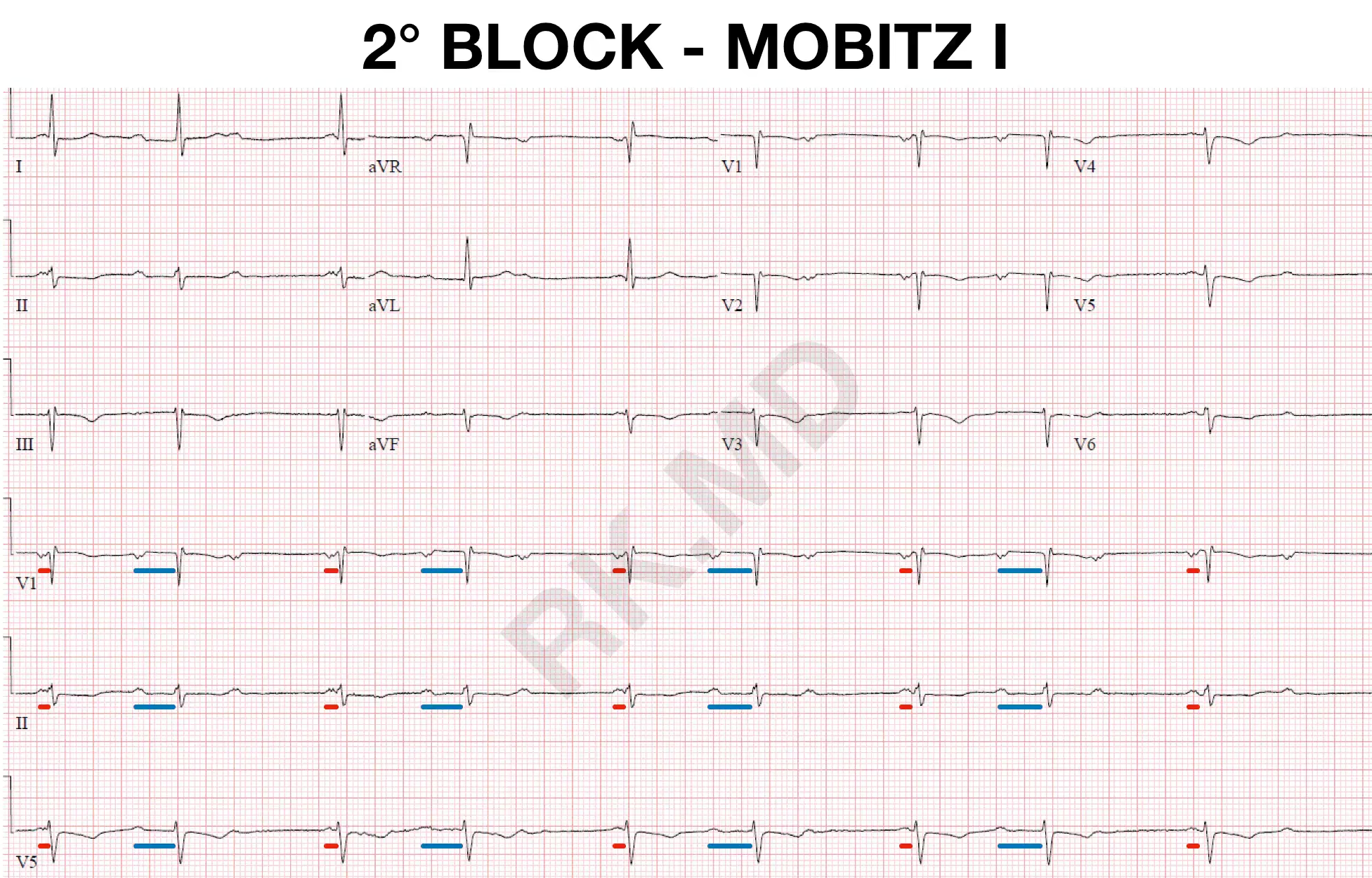
    2° atrioventricular block – Mobitz I (often referred to as the Wenckebach phenomenon) is characterized by the progressive lengthening of the PR interval with each successive heartbeat until a beat is completely blocked (a P wave not followed by a QRS complex). Mobitz I generally involves progressive fatigue of AV…

    Read More

  • Double Sequential External Defibrillation (DSED)

    Double Sequential External Defibrillation (DSED)

    Double sequential external defibrillation (DSED) can be used in ventricular fibrillation (VF) which remains refractory to conventional ACLS protocols. It involves utilizing two defibrillators to rapidly deliver two shocks in succession to increase energy sent to the myocardium with multiple vectors at a lower shock impedance. This technique has also…

    Read More

  • Hypophosphatemia

    Hypophosphatemia

    Phosphate is crucial for cellular/energy metabolism, bone integrity, and various enzymatic processes. Hypophosphatemia is classified as mild (2.5-3 mg/dL), moderate (1-2.5 mg/dL), or severe (<1 mg/dL, up to 30% all-cause mortality!) based on serum concentration. Mechanisms of hypophosphatemia include transcellular shifting (refeeding syndrome, insulin administration, alkalosis), renal losses (primary hyperparathyroidism,…

    Read More