• Hypertonic Salt Bomb

    Hypertonic Salt Bomb

    A 23.4% hypertonic saline (HTS) infusion (referred to as a “salt bomb”) is primarily indicated for cases of refractory intracranial hypertension as seen in traumatic brain injury, large strokes, and malignant cerebral edema. HTS generates an osmotic shift to draw water out of swollen brain tissue to reduce intracranial pressure…

    Read More

  • Isosorbide Mononitrate Versus Dinitrate

    Isosorbide Mononitrate Versus Dinitrate

    Isosorbide mononitrate (Imdur, ISMN) and isosorbide dinitrate (Isordil, ISDN) are two nitrates used to induce venodilation and alleviate angina pectoris, but they differ in their pharmacokinetics and clinical applications. Both ISMN and ISDN are prodrugs that undergo biotransformation to release nitric oxide (NO). This occurs more directly in ISMN, whereas…

    Read More

  • Aprepitant

    Aprepitant

    Aprepitant (Emend) is a potent, oral antiemetic used to prevent chemotherapy-induced nausea and vomiting (CINV) and postoperative nausea and vomiting (PONV). Fosaprepitant is a prodrug of aprepitant, with the benefit that it can be administered intravenously for patients who are too nauseous to reliably take oral aprepitant. Aprepitant specifically targets and inhibits NK1 receptors,…

    Read More

  • Fosphenytoin

    Fosphenytoin

    Fosphenytoin (Cerebyx) is a prodrug of phenytoin, an antiepileptic drug used to treat seizures. Unlike phenytoin, which is poorly soluble in water and can cause severe local irritation if injected into the muscle, fosphenytoin is water-soluble and can be administered intravenously without causing tissue damage. Fosphenytoin is rapidly converted to…

    Read More

  • Sulfur Hexafluoride

    Sulfur Hexafluoride

    Sulfur hexafluoride (Lumason) is a medical contrast agent used for ultrasound imaging. It is a clear, colorless, and odorless liquid that is injected into the bloodstream, where it forms tiny bubbles that reflect ultrasound waves. This allows for enhanced visualization of blood vessels, organs, and other structures within the body.…

    Read More

  • Alprostadil

    Alprostadil

    Alprostadil (Prostaglandin E1, PGE1) is a medication used to treat erectile dysfunction and pulmonary arterial hypertension (PAH). PAH is a progressive condition in which the arteries that carry blood from the heart to the lungs become narrowed, making it difficult for the heart to pump blood effectively. This can lead…

    Read More

  • Fluorescein

    Fluorescein

    Fluorescein is a dye that is used in a variety of medical and scientific applications. For example, it is often used as a diagnostic tool to help identify and treat eye conditions and visualize blood flow in the body. In the eye, fluorescein detects and diagnoses conditions such as corneal…

    Read More

  • Bivalirudin

    Bivalirudin

    Bivalirudin (Angiomax) is an intravenous direct thrombin inhibitor used as an anticoagulant for acute coronary syndrome, mechanical circulatory support, and cardiopulmonary bypass when patients have a contraindication to use heparin (e.g., heparin-induced thrombocytopenia). The usual dose of bivalirudin is a bolus of 0.75 mg/kg followed by an infusion of 1.75…

    Read More

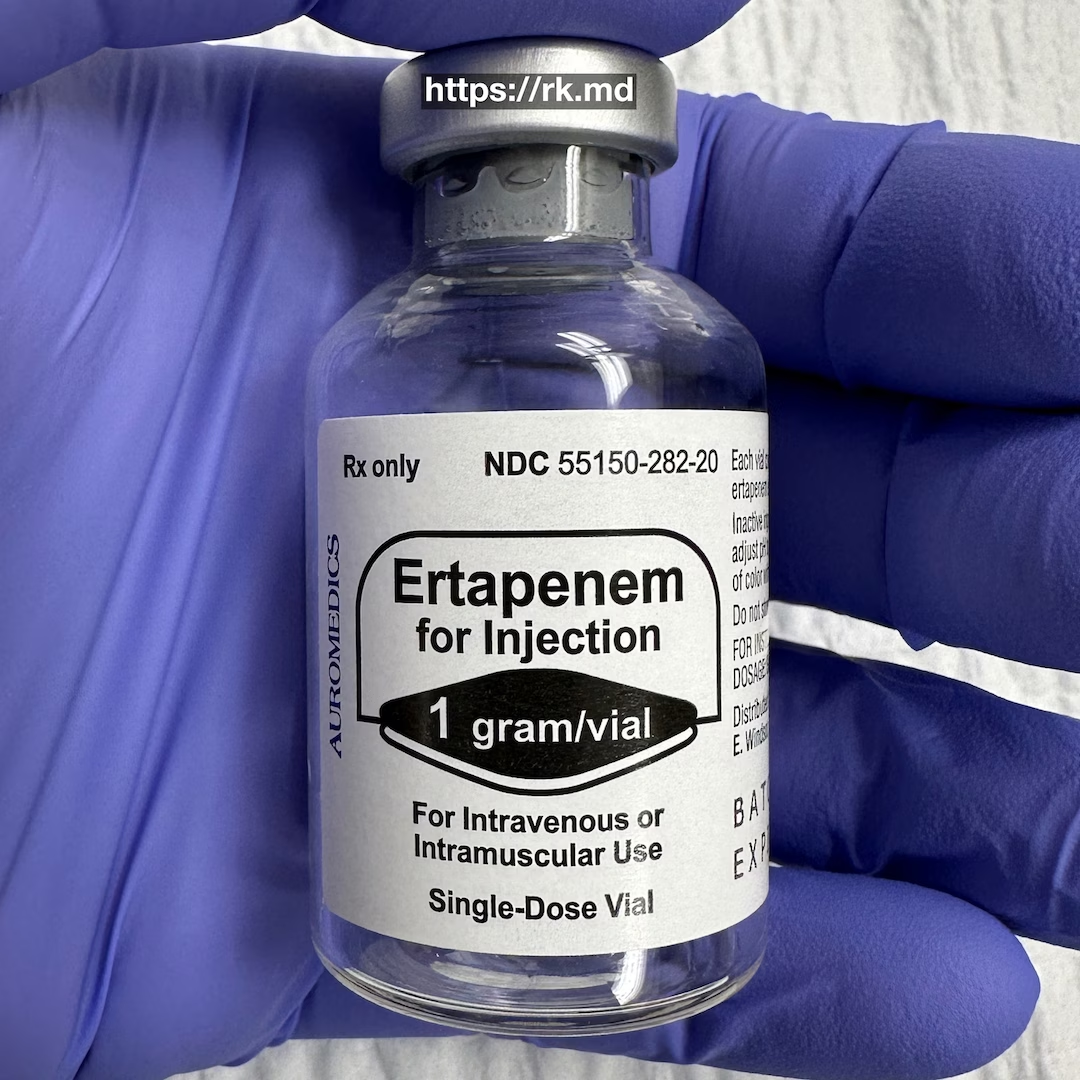
  • Ertapenem

    Ertapenem

    Ertapenem (Invanz) is an intravenous carbapenem antibiotic. Compared to meropenem, ertapenem has a more limited spectrum of activity, notably lacking activity against Pseudomonas, Acinetobacter, and Enterococcus – some very important healthcare-associated organisms. Furthermore, it’s not an excellent option for penicillin-resistant pneumococci. Although I rarely use this antibiotic in my OR…

    Read More

  • Cangrelor

    Cangrelor

    Cangrelor (Kengreal) is an intravenous P2Y12 platelet inhibitor which is run as a continuous infusion. Unlike clopidogrel (Plavix) which is a prodrug requiring conversion to an active metabolite, cangrelor is already active and has a quick onset. Furthermore, stopping the infusion results in rapid restoration of platelet function in ~1…

    Read More