• Ultrasound – Piezoelectric Effect, Frequency, and Probe Types

    Ultrasound – Piezoelectric Effect, Frequency, and Probe Types

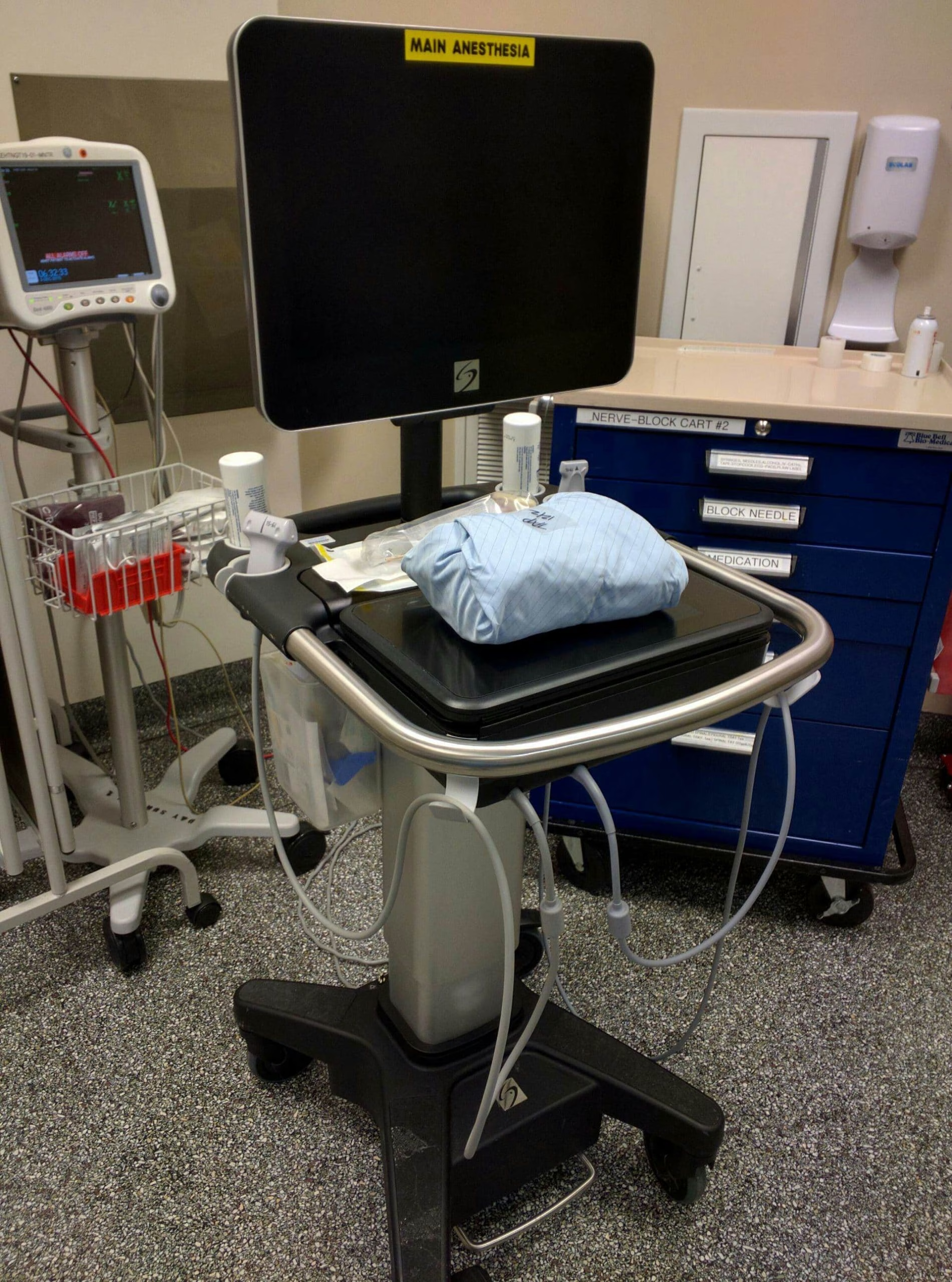
    Ultrasound is not only a great bedside diagnostic modality, but it’s routinely used to guide procedures like line placement, peripheral nerve blocks, and thora/paracentesis. It relies on pulses of high frequency sound waves reflecting off structures of varying acoustic properties to generate echos that are subsequently assembled into an image.
    Read More

  • 25% Done With Critical Care Fellowship!

    25% Done With Critical Care Fellowship!

    I’ve finished over three months of my critical care fellowship, and my has the time flown by! I’ve completed items 1 – 7 on my list of rotations and will be starting a two week elective in TEE/imaging tomorrow. It’ll be a nice preview of what I’ll be doing next…

    Read More

  • Lung Sliding On Ultrasound

    Lung Sliding On Ultrasound

    During normal respirations, the parietal pleura slides over the visceral pleura. This movement can be visualized with ultrasound. The lack of sliding can be a concerning sign for pneumothorax, although data suggest that such a finding may have a poor positive predictive value in the critically ill population. So how do we…

    Read More

  • IVC Measurements Using Echocardiography

    IVC Measurements Using Echocardiography

    The subcostal view on transthoracic echocardiography can be used to examine the inferior vena cava (IVC), a large valveless vein that returns blood from the lower body to the right atrium (RA).

    Read More

  • Cardiac Output With LVOT Measurements Using Echocardiography

    Cardiac Output With LVOT Measurements Using Echocardiography

    It’s possible to utilize transthoracic echocardiography (TTE), a noninvasive technique, to estimate a patient’s cardiac output. I’ll use some images from an echo I performed on a patient with a depressed left ventricular ejection fraction on low dose pressors. Yes, I know the echo images aren’t perfect. :-PWe know that cardiac…

    Read More

  • Tricuspid Annular Plane Systolic Excursion (TAPSE)

    Tricuspid Annular Plane Systolic Excursion (TAPSE)

    Due to the right ventricle’s (RV) unique geometry and cylindrical contraction pattern, assessing its function in echocardiography can be difficult. One of the more simple and reproducible techniques used to determine RV function is the tricuspid annular plane systolic excursion (TAPSE).  This is easy to do at the bedside using…

    Read More