
I previously wrote about the oxygen delivery equation mathematically describing a vital concept in physiology. Now I want to discuss another critically important formula in acute care medicine – the alveolar gas equation.
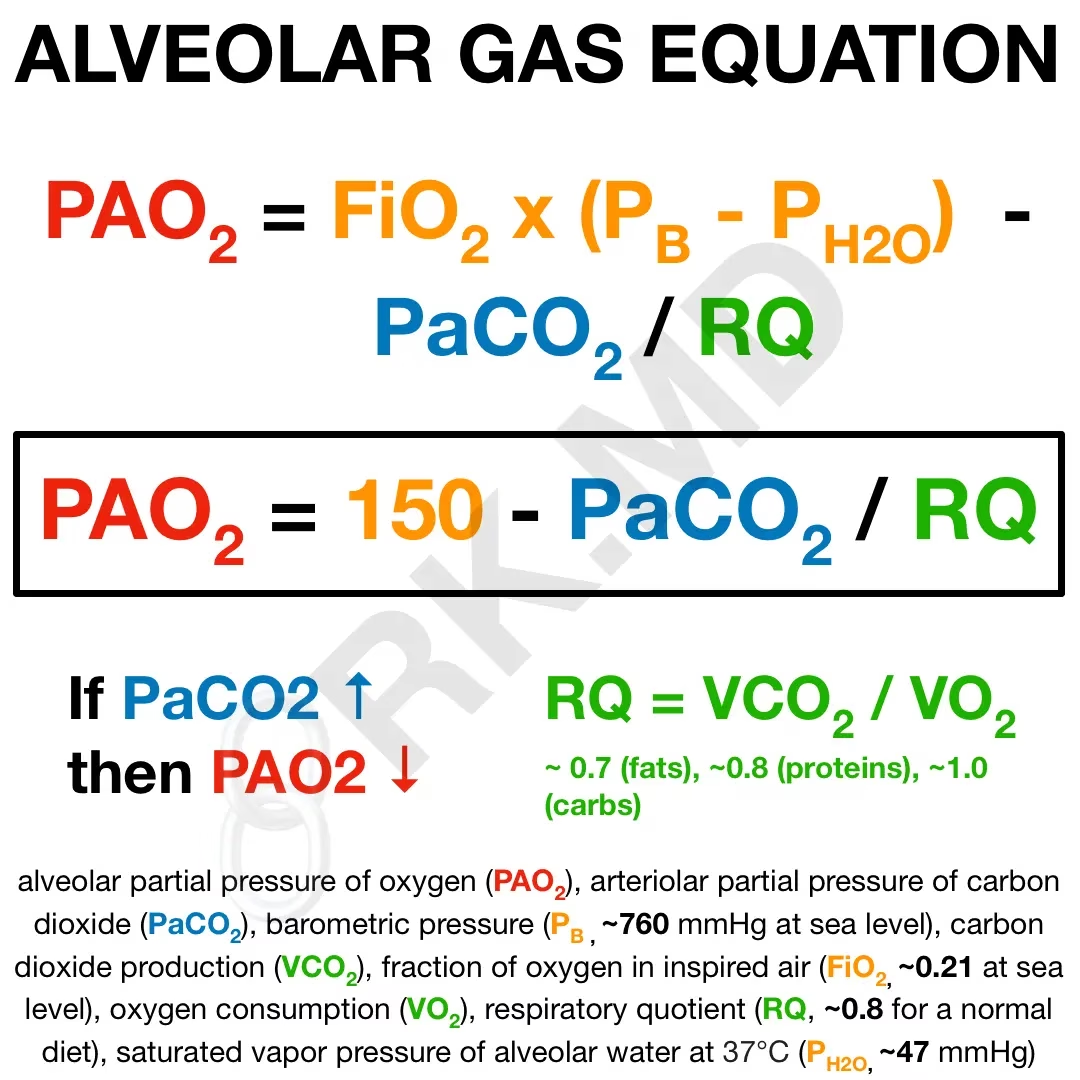
The most important relationship shown by this equation is that as arterial carbon dioxide (PaCO2) increases, the alveolar partial pressure of oxygen (PAO2) must decrease. This implies that worsening hypercarbia will ultimately lead to hypoxemia.
Additionally, decreasing the inspired oxygen concentration (FiO2) or increasing the altitude (decreased barometric pressure, PB) will also reduce PAO2 independent of PaCO2.
As an intensivist and cardiothoracic anesthesiologist, I utilize this equation (for alveolar oxygen, PAO2) in combination with arterial blood gas (for arterial oxygen, PaO2) to determine how effectively oxygen is being transferred into the bloodstream for my patients in the ICU and OR. The resulting “A-a” gradient helps me determine the cause(s) of hypoxemia.
Normal A-a gradient (5-10 mmHg): I’m thinking of either hypoventilation (poor pulmonary mechanics, neuromuscular disease/weakness, CNS depression from sedation, etc.) or ↓ FiO2 due to high altitude.
Elevated A-a gradient: I’m thinking of pathologies that create ventilation-perfusion (“V/Q”) mismatch, right-to-left shunts (e.g., intracardiac defects like ASD/VSD, pulmonary arteriovenous malformations, etc.), diffusion defects across the alveolar-capillary membrane interface like fibrosis, and hypermetabolic states with high oxygen consumption.
Understanding the alveolar gas equation is important to know if a patient’s oxygenation and ventilation make sense based on measured lab values, and how we can go about optimizing variables to improve these parameters. :-)




Leave a Reply