
Total pneumonectomy (removal of the entire lung) is most commonly performed for centrally located lung cancer when sleeve resection or lung-sparing surgery is not feasible. Less common indications include severe bronchiectasis, invasive infection, massive hemoptysis, or traumatic destruction of the lung. Unlike lobectomy, pneumonectomy abruptly removes half of the pulmonary vascular bed, leaving the remaining lung responsible for all gas exchange.
Postoperatively, pulmonary vascular resistance rises while the remaining lung undergoes compensatory hyperinflation. The right ventricle suddenly faces increased afterload, making patients vulnerable to RV dysfunction and hypoxemia. Simultaneously, the post-pneumonectomy space gradually fills with fluid, and the mediastinum slowly shifts toward the operative side.
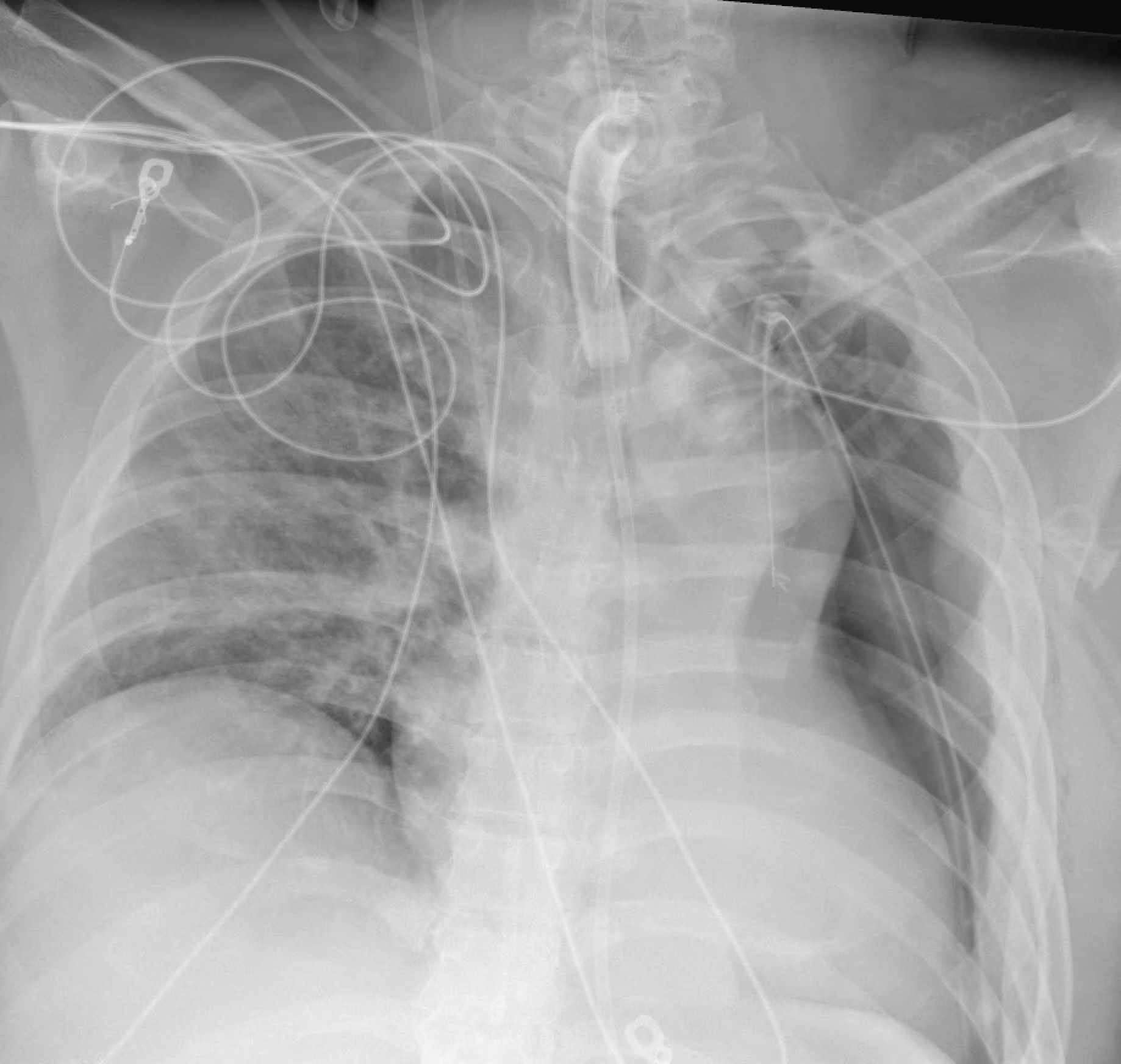
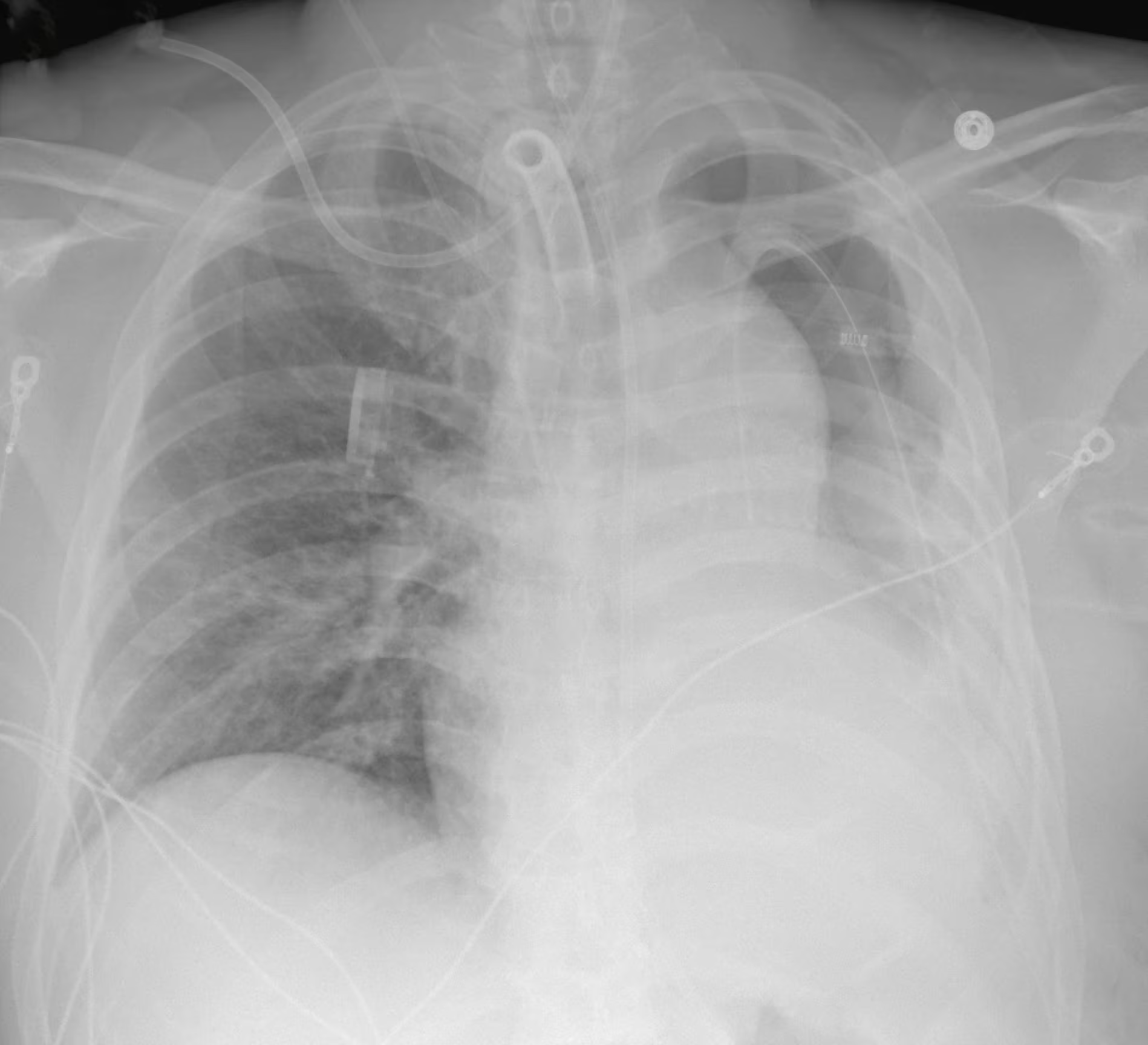
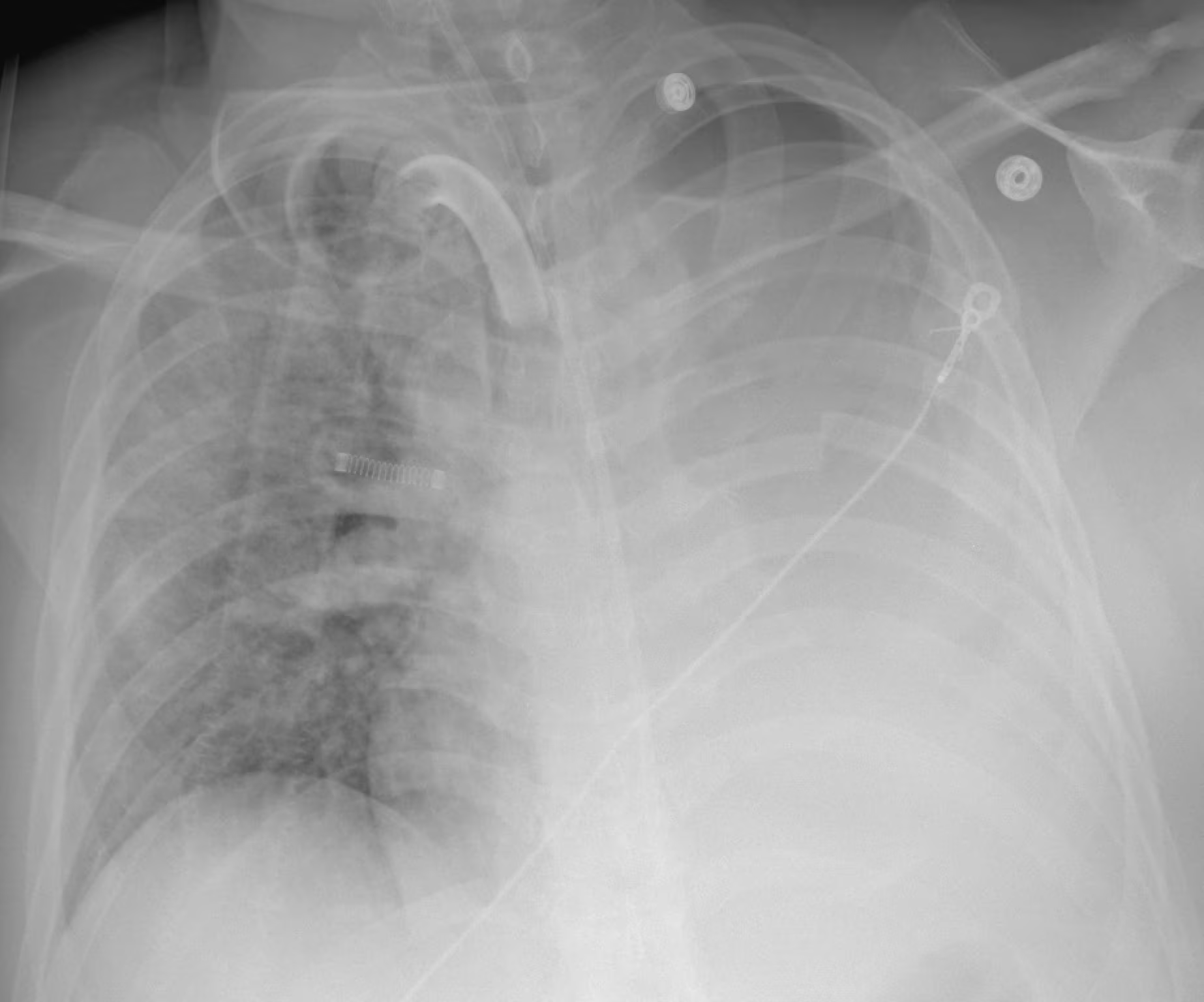
Here are some chest X-rays that show a progression following a total left pneumonectomy:
- Left-sided hemothorax with rightward mediastinal shift (top left)
- Post-op day 0 following total left pneumonectomy with leftward mediastinal shift (top right)
- Fluid building in the left pleural space (bottom left)
- Left pleural chest tube removed, left pleural space filled with fluid (bottom right)

ICU management focuses on protecting the remaining lung. Fluid administration must be cautious because excessive crystalloid can rapidly precipitate post-pneumonectomy pulmonary edema. These patients often tolerate vasopressors/inotropes better than aggressive volume resuscitation. If mechanical ventilation is required, low tidal volumes and avoidance of excessive airway pressures are essential, as ventilator-induced injury to the single remaining lung or to the bronchial stump from the resected lung can be catastrophic.
Atrial fibrillation is common after these operations, but perhaps the most feared complication is a bronchopleural fistula (BPF). BPF should be suspected in patients with sudden respiratory deterioration, persistent air leak, or changes in the pneumonectomy space fluid level. Progressive hypoxemia, RV failure, pulmonary edema, and mediastinal shift abnormalities can all become life-threatening quickly.


Leave a Reply