• Saddle Pulmonary Embolism (PE)

    Saddle Pulmonary Embolism (PE)

    Saddle pulmonary embolism (SPE) is a severe and life-threatening condition when a blood clot (embolus) becomes lodged in the main pulmonary artery, blocking blood flow to both lungs. The term “saddle” refers to the shape of the clot, which straddles the bifurcation of the pulmonary artery, resembling a saddle. The…

    Read More

  • Alprostadil

    Alprostadil

    Alprostadil (Prostaglandin E1, PGE1) is a medication used to treat erectile dysfunction and pulmonary arterial hypertension (PAH). PAH is a progressive condition in which the arteries that carry blood from the heart to the lungs become narrowed, making it difficult for the heart to pump blood effectively. This can lead…

    Read More

  • Pulmonary Alveolar Proteinosis

    Pulmonary Alveolar Proteinosis

    Pulmonary alveolar proteinosis (PAP) is a diffuse lung disease caused by problems with: surfactant metabolism, alveolar macrophage function, granulocyte-macrophage colony stimulating factor, or an unknown etiology. These can lead to the deposition of surfactant and apoproteins within the alveoli. Symmetric alveolar opacities in a classic “bat-wing” distribution are characteristic chest…

    Read More

  • Heliox

    Heliox

    Heliox is a gas mixture consisting of, in this example, 21% oxygen and 79% helium (although other ratios exist). Remember that atmospheric air contains ~21% oxygen and ~78% nitrogen. Although helium and air share a similar viscosity, substituting helium for nitrogen reduces the gas mixture’s overall density. Our large, conducting…

    Read More

  • Anatomical Lungs Emoji
  • Breathing Patterns

    Breathing Patterns

    A patient’s breathing pattern can help guide response to therapies and diagnostics. Normal breathing is regular and comfortable at a rate of 12-20 breaths per minute (bpm).

    Read More

  • West’s Lung Zones

    West’s Lung Zones

    To maximize gas exchange, well-ventilated alveoli (V) should be associated with good pulmonary capillary blood perfusion (Q). This is the idea behind V/Q matching. Gravitational forces create heterogeneity perfusing dependent portions of the lung better – the lung base in the upright position, and the posterior lung in the supine…

    Read More

  • Percutaneous Tracheostomy

    Percutaneous Tracheostomy

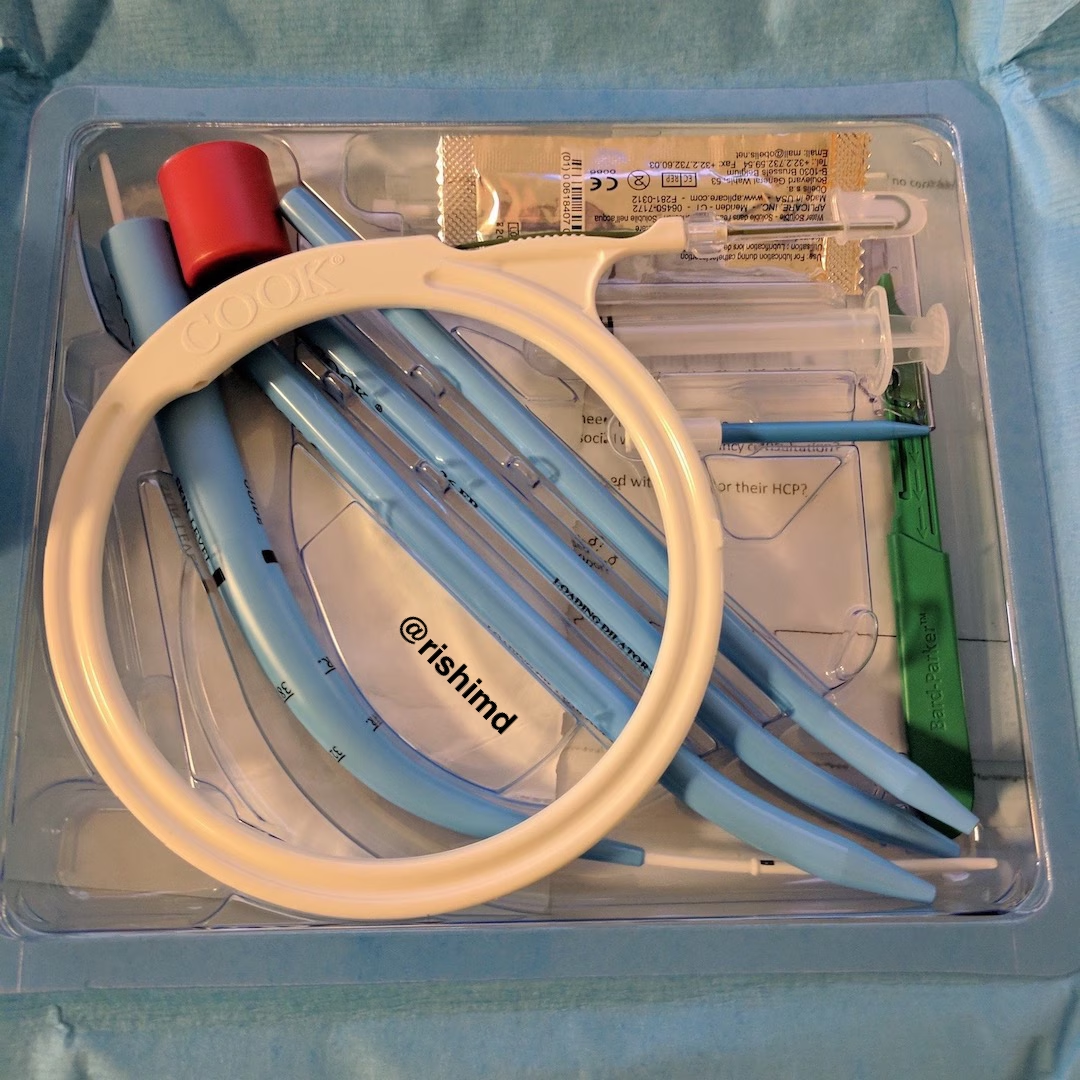
    Percutaneous tracheostomy (“perc trach”) is a procedure that is routinely performed at the bedside on patients who require prolonged mechanical ventilation or airway control due to an upper airway obstruction or for pulmonary hygiene. This technique is contraindicated in emergent situations, nonintubated patients, pediatrics, and in patients with midline masses.…

    Read More

  • Subcutaneous Emphysema

    Subcutaneous Emphysema

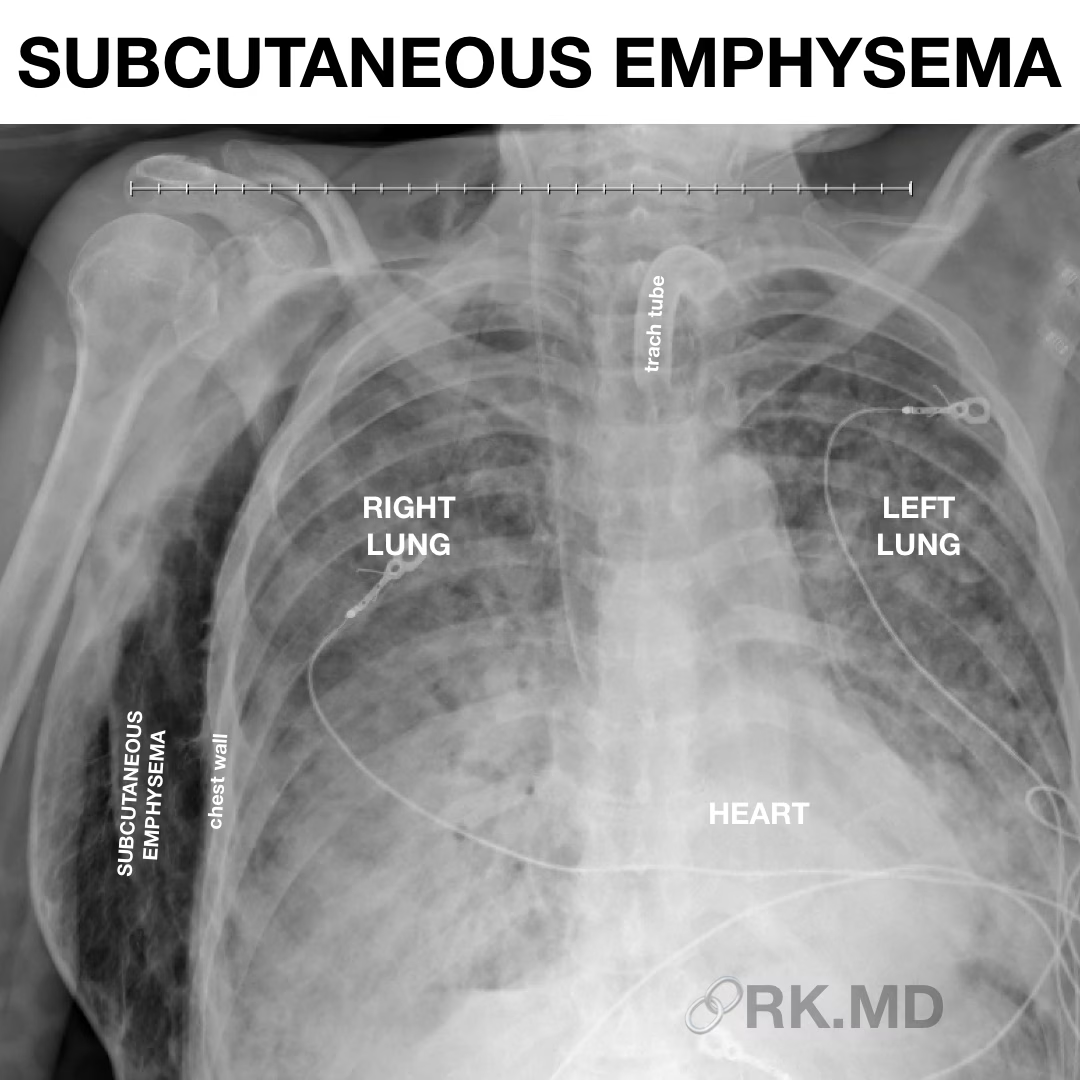
    Subcutaneous emphysema occurs when air gets trapped within the subcutaneous regions of the face, neck, chest wall, abdomen, and even down to the thighs/legs. The characteristic physical exam finding of crepitus (“snap-crackle-pop”) is caused by air traversing tissue planes during palpation.

    Read More

  • Prone Chest X-Rays

    Prone Chest X-Rays

    In severe COVID-19 pneumonia with refractory hypoxemia, patients are often proned (put on their abdomen), deeply sedated, and paralyzed to improve synchrony with the ventilator. The goal with proning is to create a more homogenous alveolar recruitment thereby decreasing shunting (parts of the lung where there is pulmonary blood flow…

    Read More