

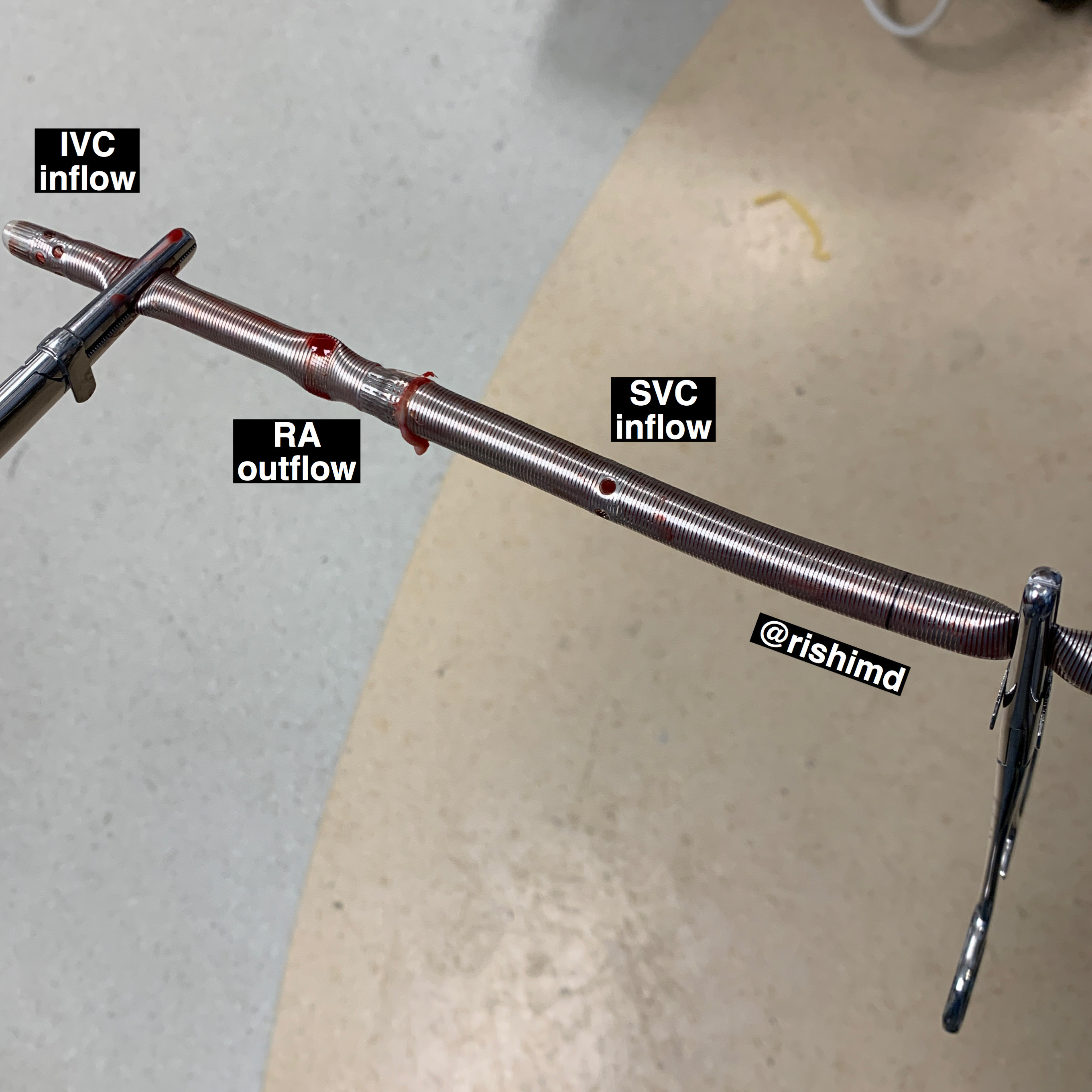
The Avalon bicaval catheter has revolutionized venovenous extracorporeal membrane oxygenation (VV-ECMO) by allowing us to place a single catheter that can simultaneously drain venous blood from the central circulation (superior and inferior vena cavas) to deliver oxygenated blood directly into the heart.
How does this work? The catheter has a dual lumen construction (one for venous inflow, one for venous outflow) which requires careful positioning utilizing fluoroscopy or echocardiography. The right internal jugular vein is accessed and a guidewire is threaded past the heart into the inferior vena cava (IVC) with subsequent dilation of the vein using progressively larger dilators. Avalon catheters come in sizes ranging from 13 to 31 French. For comparison, many of the hemodialysis catheters I’ve placed are 13.5 French.
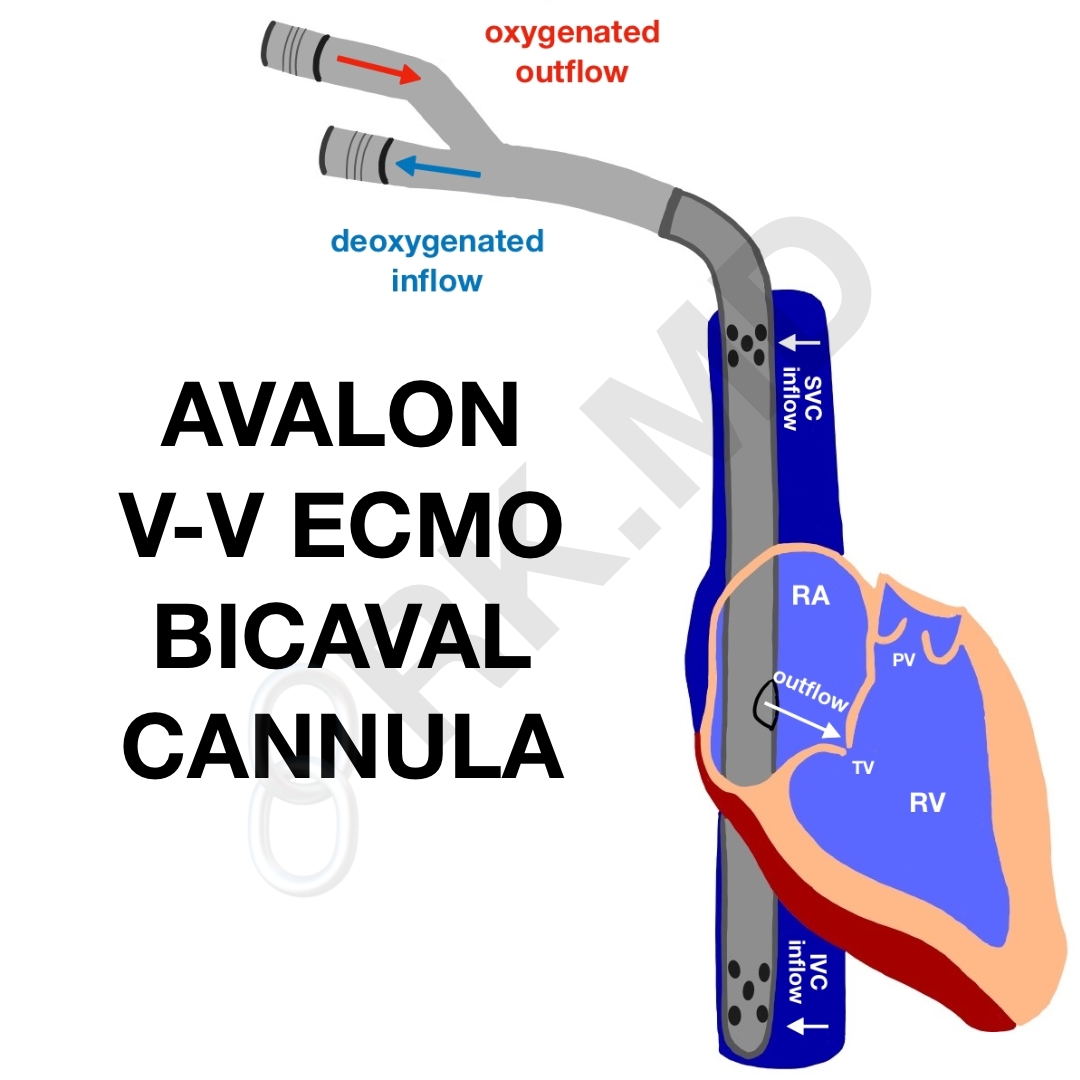
The outflow must be directed towards the tricuspid valve to ensure proper flow during VV-ECMO. By having the catheter in the neck, these patients can ambulate while waiting for a lung transplant, resolution of their pulmonary process, etc. Remember that movement of the catheter can lead to suction events, inadequate flows, or remixing of blood, resulting in hypoxemia.
Drop me a comment below with questions! 🙂



Is there a significant difference between the Crescent vs the Avalon cannula?
The concept is the same, and I don’t know of any studies comparing the two head-to-head. Also, the Avalon has inflow ports in the SVC and IVC whereas the Crescent only has IVC inflow.
In which echo view are you controlling the right position of the catheter?
Primarily the midesophageal bicaval and modified bicaval views looking at wire entry into the IVC and the outflow positioning towards the tricuspid valve.
Can it mantain circulaton for a few minutes if the heart is not beating?
That would expan its use greatly.
No it can’t. There would be nothing to circulate blood that is introduced into the right side of the heart.