• Subclavian Central Line Pneumothorax

    Subclavian Central Line Pneumothorax

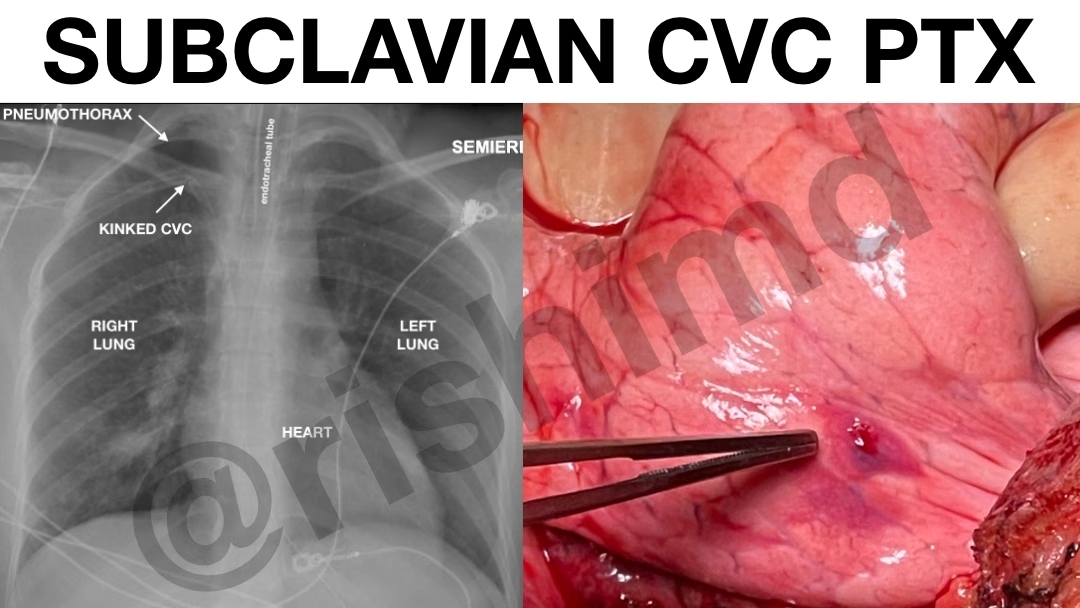
    Compared to internal jugular and femoral central venous catheters (CVCs), I prefer placing subclavian CVCs because they don’t tether patients’ necks, they’re easy to access, they’re easy to dress, and they’re in a part of the body that doesn’t “bend.” Subclavian vein cannulation is similar to epidural catheter placement in…
    Read More

  • Anticoagulation In Cirrhosis

    Anticoagulation In Cirrhosis

    Patients with liver cirrhosis often have low platelets (splenic sequestration) and elevated INRs due to decreased synthesis of factor VII, among other clotting factors; however, remember that they also have reduced synthesis of anticoagulant proteins like proteins C/S and antithrombin. The quantitative/qualitative platelet defects are offset to some degree by…

    Read More

  • Enoxaparin

    Enoxaparin

    Enoxaparin (Lovenox) is a low molecular weight heparin (LMWH) routinely administered subcutaneously (SC) for prophylaxis or treatment of deep vein thrombosis, acute pulmonary embolism, and even medically-managed STEMIs (+/- percutaneous coronary interventions).

    Read More

  • West’s Lung Zones

    West’s Lung Zones

    To maximize gas exchange, well-ventilated alveoli (V) should be associated with good pulmonary capillary blood perfusion (Q). This is the idea behind V/Q matching. Gravitational forces create heterogeneity perfusing dependent portions of the lung better – the lung base in the upright position, and the posterior lung in the supine…

    Read More

  • Cardiac Action Potential

    Cardiac Action Potential

    In order for the heart muscle to actually contract, the physiological process of excitation-contraction coupling must occur via an action potential propagated through the myocardium. Normally, these muscle cells have a resting transmembrane potential (TMP) around -90 mV (more negative intracellularly than extracellularly). This gradient is created and changed by…

    Read More

  • Tigecycline

    Tigecycline

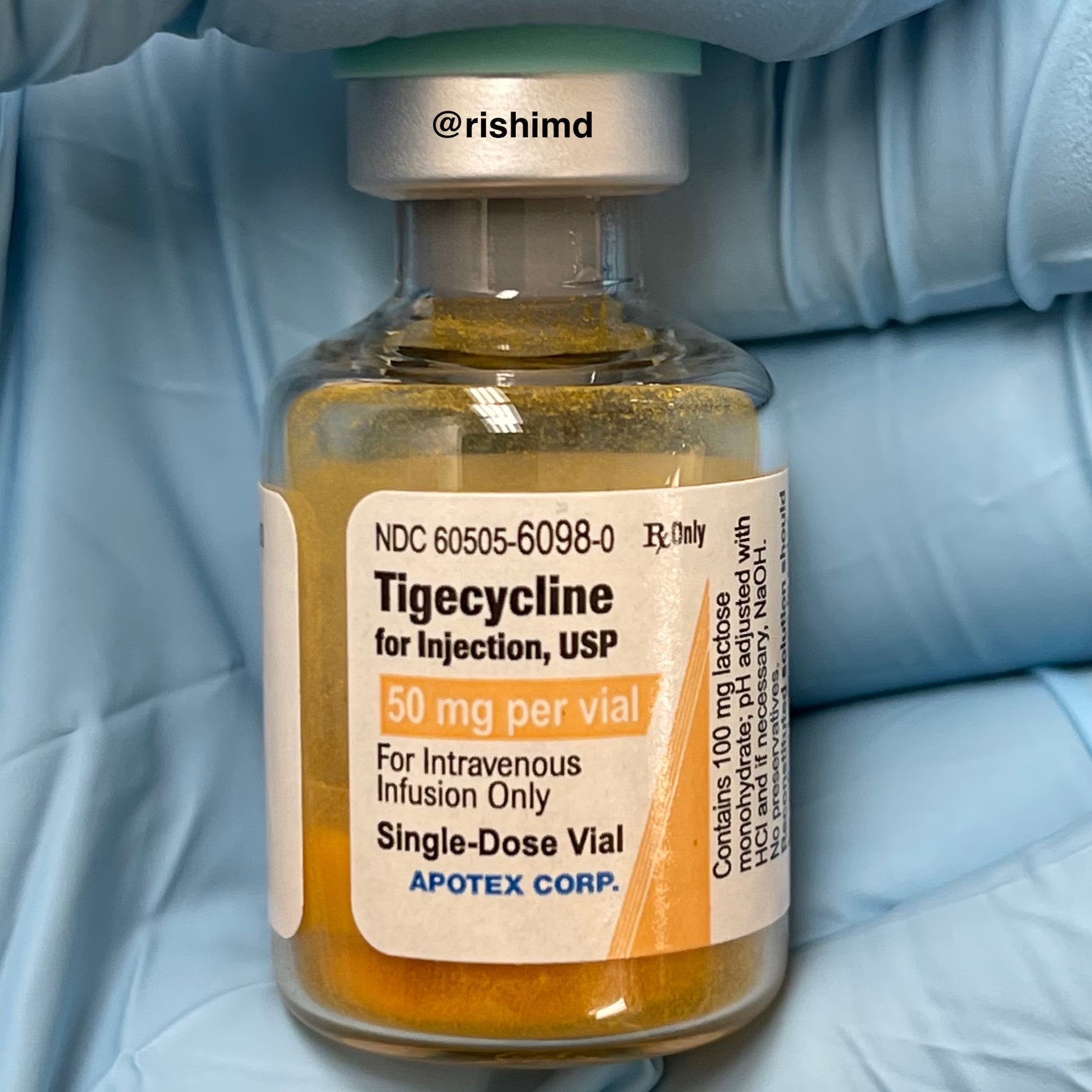
    Tigecycline (Tygacil) is an intravenous glycylcycline antibiotic used to treat a variety of skin/soft tissue infections, complicated intra-abdominal infections, and community-acquired pneumonia (NOT hospital/ventilator-acquired pneumonia).

    Read More

  • Posey Cufflator Manometer

    Posey Cufflator Manometer

    Endotracheal tubes (ETTs) and tracheostomy tubes have pilot balloons which are inflated to expand a pilot cuff situated within the trachea below the vocal cords. This is termed a “secure airway.”

    Read More

  • Subcutaneous Emphysema

    Subcutaneous Emphysema

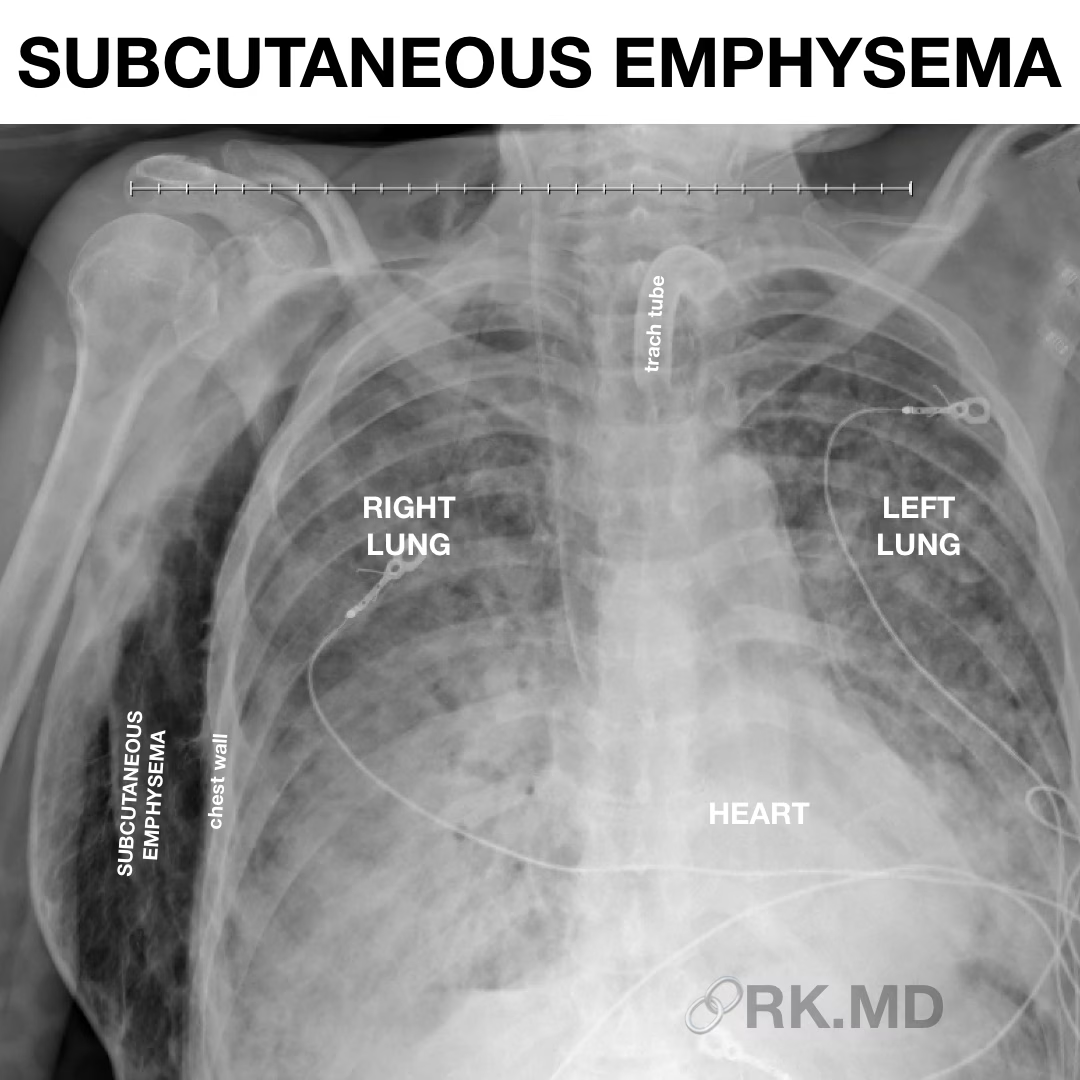
    Subcutaneous emphysema occurs when air gets trapped within the subcutaneous regions of the face, neck, chest wall, abdomen, and even down to the thighs/legs. The characteristic physical exam finding of crepitus (“snap-crackle-pop”) is caused by air traversing tissue planes during palpation.

    Read More

  • Antibody Structure

    Antibody Structure

    With all the discussion surrounding antibody production after receiving a COVID-19 vaccine, let’s talk about the structure of an antibody.

    Read More

  • Prone Chest X-Rays

    Prone Chest X-Rays

    In severe COVID-19 pneumonia with refractory hypoxemia, patients are often proned (put on their abdomen), deeply sedated, and paralyzed to improve synchrony with the ventilator. The goal with proning is to create a more homogenous alveolar recruitment thereby decreasing shunting (parts of the lung where there is pulmonary blood flow…

    Read More