
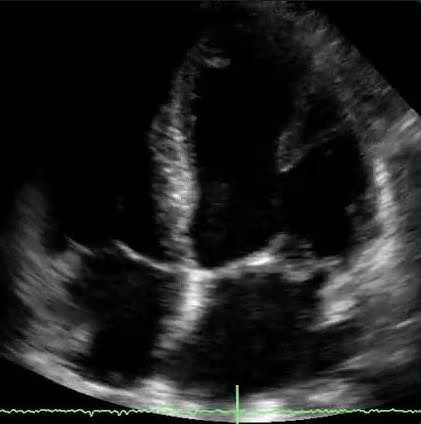
• Cardiac Transthoracic Echocardiography (TTE) – Summary And Labeled Views

    Cardiac Transthoracic Echocardiography (TTE) – Summary And Labeled Views

    Here’s a quick primer of cardiac transthoracic echocardiography (TTE) including actual images I’ve taken as a critical care fellow with corresponding labeled diagrams. I challenge you all to actually review your patients’ echo images instead of reading the final impression. You don’t need to know the nitpicky numbers, gradient assessments,…

    Read More

  • Ultrasound – Piezoelectric Effect, Frequency, and Probe Types

    Ultrasound – Piezoelectric Effect, Frequency, and Probe Types

    Ultrasound is not only a great bedside diagnostic modality, but it’s routinely used to guide procedures like line placement, peripheral nerve blocks, and thora/paracentesis. It relies on pulses of high frequency sound waves reflecting off structures of varying acoustic properties to generate echos that are subsequently assembled into an image.

    Read More

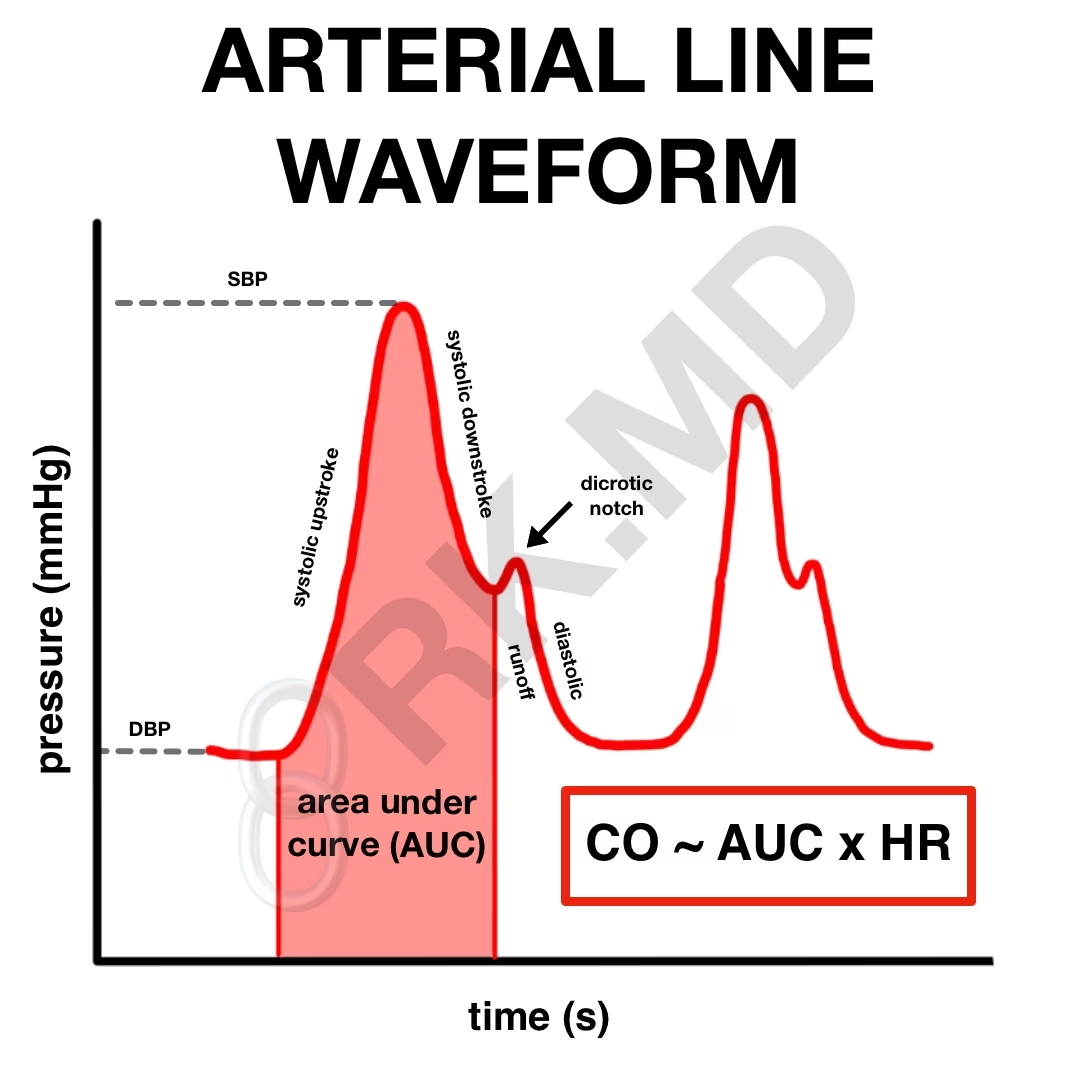
  • Pressure Transducers And Arterial Line Waveforms

    Pressure Transducers And Arterial Line Waveforms

    Pressure transducers are a cornerstone for measuring arterial, central venous, pulmonary artery, and even intracranial pressures. These transducers operate through a Wheatstone bridge, a circuit with an arrangement of resistors of known resistance except for one. This unknown resistor is a strain gauge coupled to your pressure of interest (A-line, CVP, etc.)…

    Read More

  • Measuring And Interpreting Intracranial Pressure (ICP) Waveforms

    Measuring And Interpreting Intracranial Pressure (ICP) Waveforms

    Managing elevated intracranial pressure (ICP) is of paramount importance in neurocritical care. Placing bedside ICP monitors are contraindicated if the patient is coagulopathic, has a brain abscess, or has an active scalp infection. Otherwise, the procedure is fairly straightforward and usually boils down to two choices: a Codman ICP monitor…

    Read More

  • ECG Axis Deviation

    ECG Axis Deviation

    Normal cardiac conduction propagates downward and leftward from the SA node to the His-Purkinje system. Thus, lead I (points to the patient’s left) and lead aVF (points straight down) represent the component vectors in the x and y planes, respectively, for the cardiac conduction axis. This means that downward is + for lead aVF, and…

    Read More

  • Succinylcholine

    Succinylcholine

    Neuromuscular blocking agents (NMBAs or “paralytics”) are categorized as depolarizing (classically succinylcholine) and nondepolarizing. They’re important drugs to know because we routinely use them in the operating room, intensive care unit, and during elective endotracheal intubations. They have potential life threatening complications like malignant hyperthermia and anaphylaxis as well as…

    Read More

  • Extubation Criteria and Failure

    Extubation Criteria and Failure

    Extubation most commonly refers to removal of an endotracheal tube (ETT) to transition a patient back to spontaneous respiration; however, when is it appropriate to do so? How do we know the patient is ready and won’t require reintubation?

    Read More

  • Reading Chest X-Rays

    Reading Chest X-Rays

    Reading a chest x-ray (CXR) is an incredibly important aspect of acute care medicine and a skill that all healthcare providers should at least have some comfort in doing. The key for interpreting any radiographic image is having a methodical approach you follow every single time, no matter how simple or complex…

    Read More

  • Lung Sliding On Ultrasound

    Lung Sliding On Ultrasound

    During normal respirations, the parietal pleura slides over the visceral pleura. This movement can be visualized with ultrasound. The lack of sliding can be a concerning sign for pneumothorax, although data suggest that such a finding may have a poor positive predictive value in the critically ill population. So how do we…

    Read More

  • Placing Post-Pyloric Feeding Tubes

    Placing Post-Pyloric Feeding Tubes

    Ileus is a common problem we face in the intensive care unit (ICU), and in pursuit of safer enteral nutrition, we are routinely placing small bore feeding tubes (SBFT) past the gastric pylorus. This is especially important in patients with severe GERD, gastrointestinal dysmotility, recurrent emesis, and those at high…

    Read More