• Equal Pressure Point In Lung Physiology

    Equal Pressure Point In Lung Physiology

    Normally, the intrapleural pressure (Pip), or the pressure in the space between the lung’s visceral and parietal pleural layers, is slightly negative relative to the atmosphere (Patm). This is due to the chest wall and lungs recoiling away from each other. During a forced expiration, expiratory muscles can increase the…

    Read More

  • How We Breathe – The Role Of Pressure Gradients
  • High Flow Nasal Cannula (HFNC)

    High Flow Nasal Cannula (HFNC)

    High flow nasal cannula (HFNC) systems allow us to deliver warm, humidified oxygen at flow rates as high as 60 liters/min through small, pliable nasal prongs. The cannula itself is fit into the nares and stabilized with a head strap. Two parameters are set – the flow rate and FiO2.…

    Read More

  • What Is Pleurodesis?

    What Is Pleurodesis?

    Pleurodesis aims to obliterate the intrapleural space in patients with recurrent malignant/non-malignant effusions and recurrent pneumothorax. In mechanical pleurodesis, surgeons usually perform a video-assisted thoracoscopic surgery (VATS), identify the parietal pleura, and rub an abrasive material against the parietal pleura. In chemical pleurodesis, agents like talc, minocycline, betadine, doxycycline, and silver nitrate…

    Read More

  • Hypoxic Pulmonary Vasoconstriction (HPV)

    Hypoxic Pulmonary Vasoconstriction (HPV)

    Hypoxic pulmonary vasoconstriction (HPV) is an intrinsic property of the lung where vascular smooth muscle will constrict pulmonary circulation in response to areas of hypoxia. In other words, if an alveolus is not being well ventilated (shunt), why waste perfusion on it? Edema, infection, atelectasis, and mucous plugging are just…

    Read More

  • Lung Sliding On Ultrasound

    Lung Sliding On Ultrasound

    During normal respirations, the parietal pleura slides over the visceral pleura. This movement can be visualized with ultrasound. The lack of sliding can be a concerning sign for pneumothorax, although data suggest that such a finding may have a poor positive predictive value in the critically ill population. So how do we…

    Read More

  • PaCO2 Equation

    PaCO2 Equation

    I’ve previously written about the alveolar gas equation and oxygen delivery equation, both of which deal with the physiologic process of oxygenation. Now I want to discuss the important relationship between alveolar ventilation (VA), carbon dioxide production (VCO2), and alveolar carbon dioxide tension (PACO2). For this explanation, PACO2 roughly approximates arterial…

    Read More

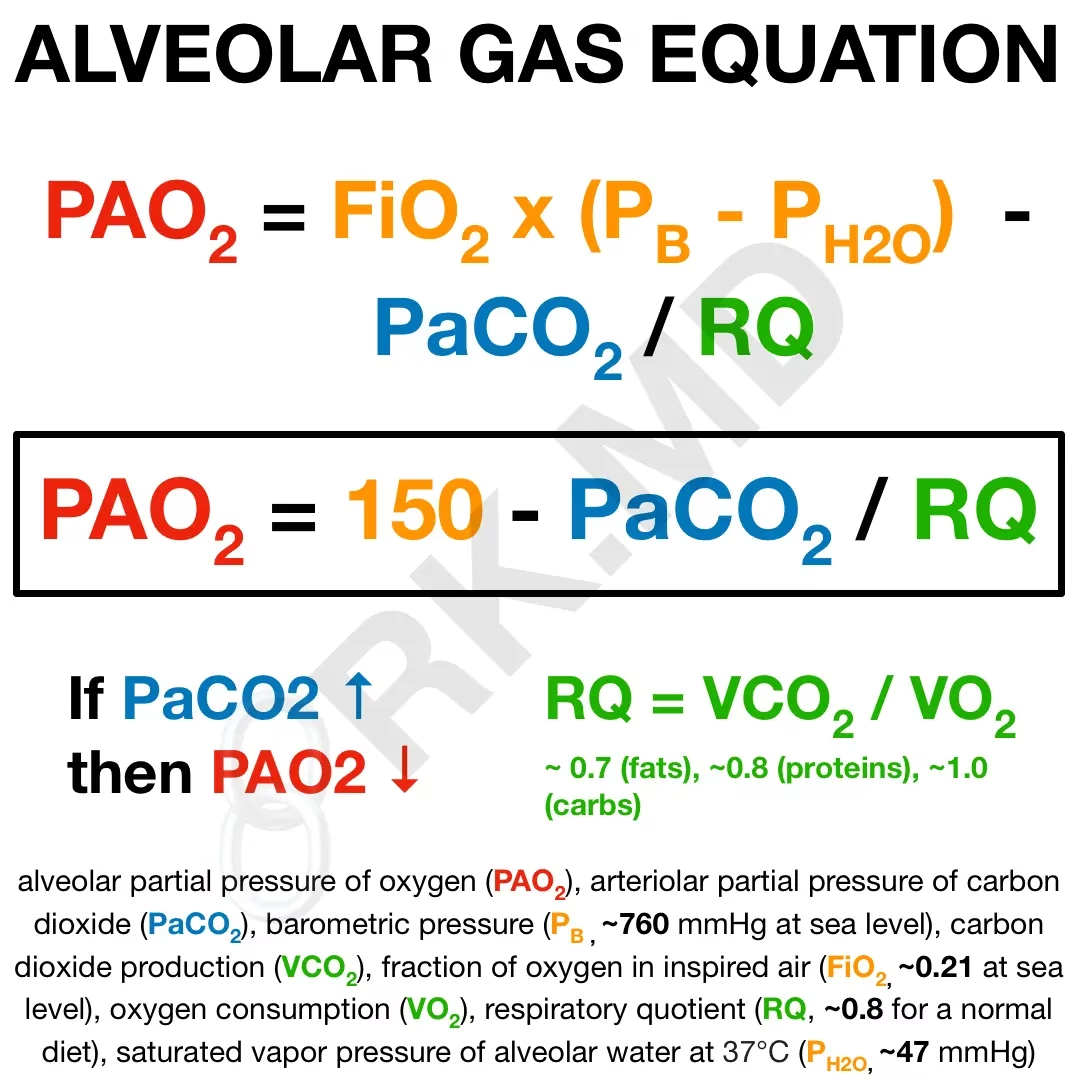
  • Alveolar Gas Equation

    Alveolar Gas Equation

    I previously wrote about the oxygen delivery equation mathematically describing a vital concept in physiology. Now I want to discuss another critically important formula in acute care medicine – the alveolar gas equation.

    Read More

  • Oxygen Delivery Equation (DO2)

    Oxygen Delivery Equation (DO2)

    The arterial oxygen delivery (DO2) equation is undeniably one of the most essential physiologic principles. DO2 is comprised of two variables: It’s crucial to consider acute changes (e.g., hemorrhage and desaturation) in the context of this equation. As shown, hemoglobin concentration and the oxygen saturation of that hemoglobin are the most…

    Read More

  • Functional Residual Capacity (FRC) And Pulmonary Vascular Resistance (PVR)