• Ultrasound Pleural Effusion And Spine Sign

    Ultrasound Pleural Effusion And Spine Sign

    In this ultrasound still image, I have a phase array probe positioned on the left side of the body around the 8th rib. A left-sided pleural effusion is noted. It’s important to appreciate this view to look for free fluid in the subphrenic and splenorenal spaces. The green arrow denotes…
    Read More

  • Neuraxial Anesthetics And Anatomy

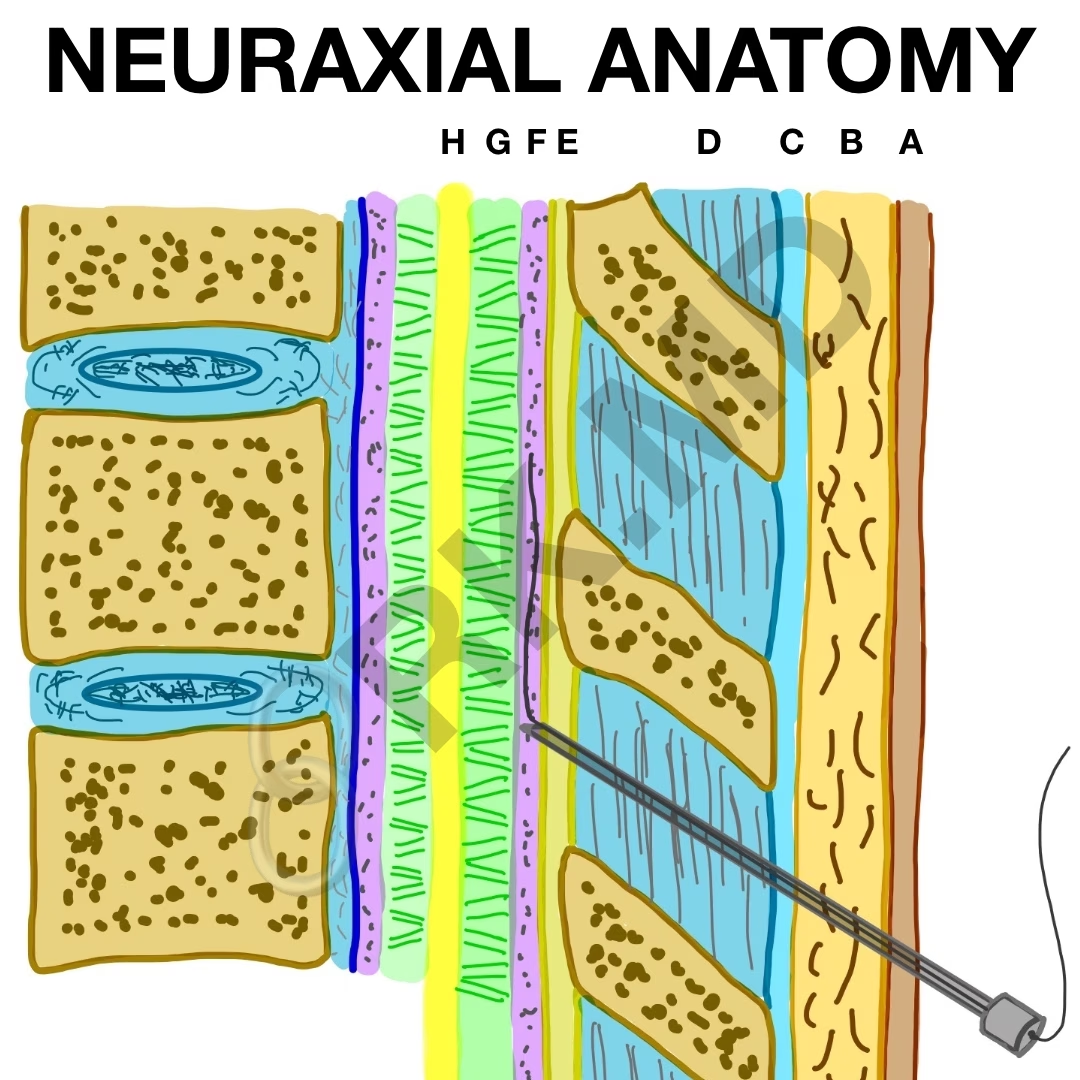
    Neuraxial Anesthetics And Anatomy

    Understanding neuraxial anatomy is an essential part to successfully perform epidural and spinal (intrathecal) anesthetics. Here’s a schematic outlining the layers we encounter when performing these procedures:

    Read More

  • Epinephrine And Beta Blockers

    Epinephrine And Beta Blockers

    With the growing usage of β-blocker therapy to control everything from atrial fibrillation and congestive heart failure to migraine prophylaxis and essential tremor, we need to be more aware of potential pitfalls due to drug interactions. A classic example is the need for epinephrine in a patient on a non-selective…

    Read More

  • Layers Of The Scalp
  • Bronchopulmonary Segments

    Bronchopulmonary Segments

    Anatomically, the trachea extends from the cricoid cartilage (level of C6/C7) to the carina (T4/T5) and is reinforced anteriorly by approximately 20 semicircular, cartilaginous rings. The trachea divides into the right and left mainstem bronchi which further divide into secondary bronchi (RUL, RML, RLL, LUL, and LLL). Of note, the…

    Read More

  • Repairing Endotracheal Tube Cuffs

    Repairing Endotracheal Tube Cuffs

    Occlusive cuffs on endotracheal tubes (ETTs) allow us to “protect the airway.” Air/fluid is added and removed from this cuff through a pilot balloon (blue in the image below) which is connected to the cuff on the distal segment of an ETT via a thin, plastic tube. Several times during fellowship,…

    Read More

  • Equal Pressure Point In Lung Physiology

    Equal Pressure Point In Lung Physiology

    Normally, the intrapleural pressure (Pip), or the pressure in the space between the lung’s visceral and parietal pleural layers, is slightly negative relative to the atmosphere (Patm). This is due to the chest wall and lungs recoiling away from each other. During a forced expiration, expiratory muscles can increase the…

    Read More

  • How We Breathe – The Role Of Pressure Gradients
  • Multimodal Analgesia

    Multimodal Analgesia

    For the last several months, multiple manufacturing delays have led to a nationwide shortage of injectable, intravenous (IV) opioid medications like morphine, hydromorphone, and fentanyl. These medications are routinely utilized in the perioperative and intensive care settings for analgesia and sedation, so the shortage has forced us to incorporate other…

    Read More

  • Starling Equation – Hydrostatic and Oncotic Pressures

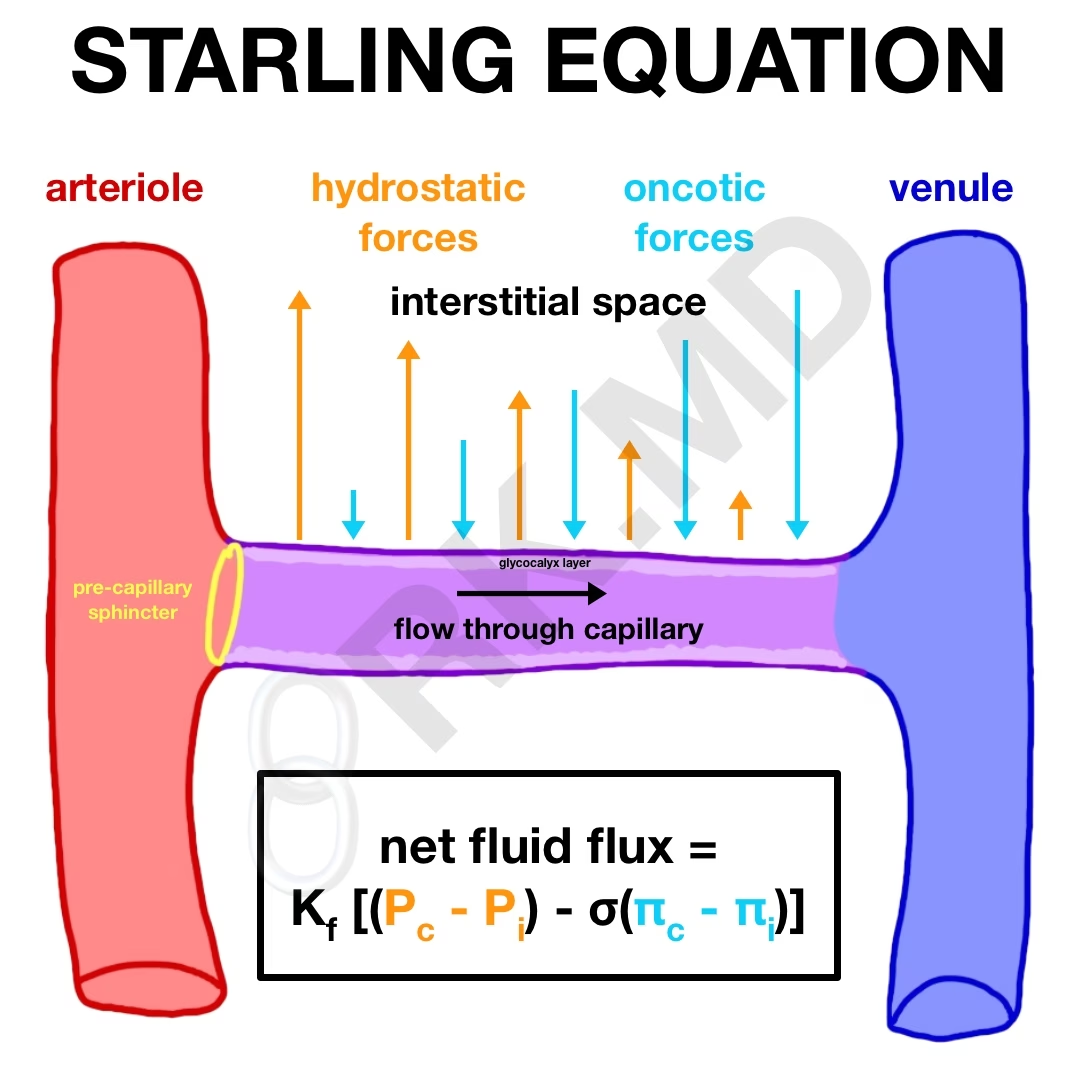
    Starling Equation – Hydrostatic and Oncotic Pressures

    “Starling forces” describe the movement across capillaries as a balance between hydrostatic and oncotic pressure gradients within the capillary and surrounding interstitium. Filtration across the capillary membrane occurs along its entire length and is based on a net driving pressure gradient.

    Read More